
Canyon de Chelly’s Crimson Canvas: A Journalist’s Guide to Its Most Breathtaking Vistas
Canyon de Chelly Navajo Nation is not merely a geological wonder; it is a living tapestry of time, culture, and profound natural beauty. Unlike many national parks, this sacred landscape, jointly managed by the National Park Service and the Navajo Nation, is a vibrant homeland where Navajo families still reside and cultivate the canyon floor. This unique dynamic imbues every vista with an unparalleled depth, transforming mere scenery into a narrative etched in sandstone. For the discerning traveler and the seeker of authentic American landscapes, Canyon de Chelly offers a series of panoramic overlooks and intimate perspectives that are among the most compelling in the Southwest.
The journey to these breathtaking views typically begins along the North and South Rim Drives, both offering distinct perspectives of the canyon’s grandeur. While both are accessible by paved roads, the South Rim Drive is often the first introduction, unfolding a dramatic sequence of overlooks that escalate in their visual impact, culminating in the iconic Spider Rock.
The South Rim: A Symphony of Scale and Story
The South Rim Drive, stretching approximately 16 miles from the visitor center, presents a chronological unfolding of the canyon’s geological and human history. Each overlook provides a fresh angle, a new revelation of the sheer scale and intricate details hidden within the canyon walls.
Tunnel Overlook serves as the initial grand reveal. Here, the canyon suddenly drops away, exposing a vast, verdant floor bordered by towering, rust-colored cliffs. It’s a powerful introduction, offering a sweeping panorama that hints at the treasures yet to be discovered. The immediate sense of immensity, of the earth opening up beneath your feet, is a foundational experience, preparing the viewer for the deeper immersions that follow.

Moving eastward, the views become more defined, leading to the White House Overlook. This is arguably the most famous and accessible of the ancient cliff dwellings, visible nearly 600 feet below. From the rim, the ruins, comprising both upper and lower sections, appear as a cluster of fragile adobe structures clinging precariously to a natural alcove. The lower ruin, built directly on the canyon floor, is particularly striking against the backdrop of the cliff face, its white plaster walls a stark contrast to the red rock.
The White House Ruin is a poignant reminder of the Ancestral Puebloans (Anasazi) who thrived here between 350 and 1300 AD. It is one of the few places where visitors can descend into the canyon without a guide, via a 2.5-mile round trip trail that winds down switchbacks, crosses the Chinle Wash, and leads directly to the ruins. This hike offers an unparalleled opportunity to experience the canyon from within, to stand among the ancient walls and feel the weight of history. "To truly appreciate the ingenuity and resilience of the people who built these homes, you must walk where they walked," notes Ranger Sarah Begay, emphasizing the immersive power of the descent. "From the rim, you see a postcard; from the floor, you feel a connection."
Further along the South Rim, Face Rock Overlook provides a unique geological spectacle. Here, a massive sandstone formation protrudes from the canyon wall, sculpted by millennia of wind and water into what strikingly resembles a human profile. It’s a testament to nature’s artistry, a reminder that the canyon itself is a living, evolving sculpture. The play of light and shadow across its features changes throughout the day, giving it different expressions and moods.
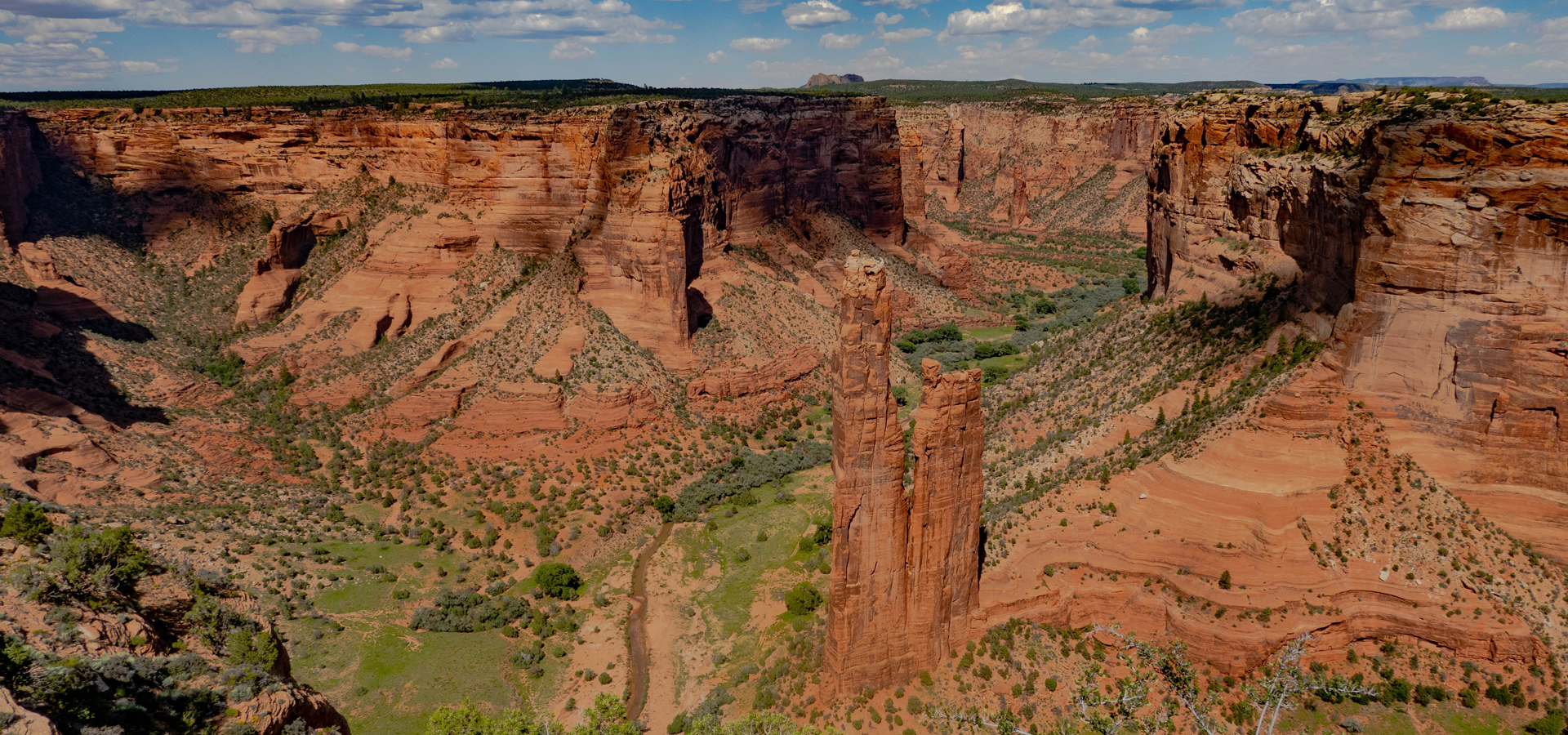
The crescendo of the South Rim is undoubtedly Spider Rock Overlook. This is the undisputed monarch of Canyon de Chelly, a breathtaking double spire of sandstone rising majestically 800 feet from the canyon floor, separated from the main cliff face. Its slender, elegant form, often bathed in the golden light of sunrise or sunset, is instantly recognizable and deeply symbolic.
Spider Rock is more than just a geological marvel; it is central to Navajo cosmology. According to tradition, the taller of the two spires is the home of Spider Woman, one of the most revered deities in Navajo culture. She is credited with teaching the Navajo people the art of weaving, with the white top of the rock said to be stained with the bones of naughty children she carried off. This legend adds a profound spiritual layer to the already awe-inspiring view, transforming a geological feature into a sacred landmark. From the overlook, the sheer height and isolation of Spider Rock are staggering, making it one of the most photographed and spiritually resonant views in the entire monument. The silence here, often broken only by the whisper of the wind, enhances the sense of reverence.
The North Rim: Serenity, Petroglyphs, and Deeper History
While the South Rim captures the dramatic highlights, the North Rim Drive, accessible for about 14 miles, offers a quieter, more contemplative experience, showcasing different aspects of the canyon’s ancient heritage and geological diversity. This drive provides views into Canyon del Muerto, a tributary canyon that branches off Canyon de Chelly.
Antelope House Overlook is a key stop along the North Rim. Perched on a broad ledge, the ruins here are notable for a large, pictographic panel depicting antelope, which gives the site its name. These vivid rock art images, painted centuries ago, offer a direct window into the spiritual and daily lives of the Ancestral Puebloans. The ruins themselves are extensive, hinting at a bustling community that once thrived in this sheltered alcove. The view here often feels more intimate, as the canyon walls seem to draw closer, creating a sense of enclosure and protection.
Further into Canyon del Muerto, the Mummy Cave Overlook presents one of the largest and most complex ruin sites in the monument. Located within a massive, dual-chambered alcove, Mummy Cave features structures from both the Basketmaker and Pueblo periods, demonstrating a long continuity of occupation. The unique aspect of Mummy Cave is the presence of a three-story tower nestled between the two caves, a remarkable feat of ancient architecture. The name "Mummy Cave" comes from the discovery of mummified human remains found here in the late 19th century. The sheer scale of the ruins, combined with the layered history they represent, makes this a profoundly significant view, inviting contemplation on the passage of time and the enduring human spirit.

The Canyon Floor: An Immersive Perspective
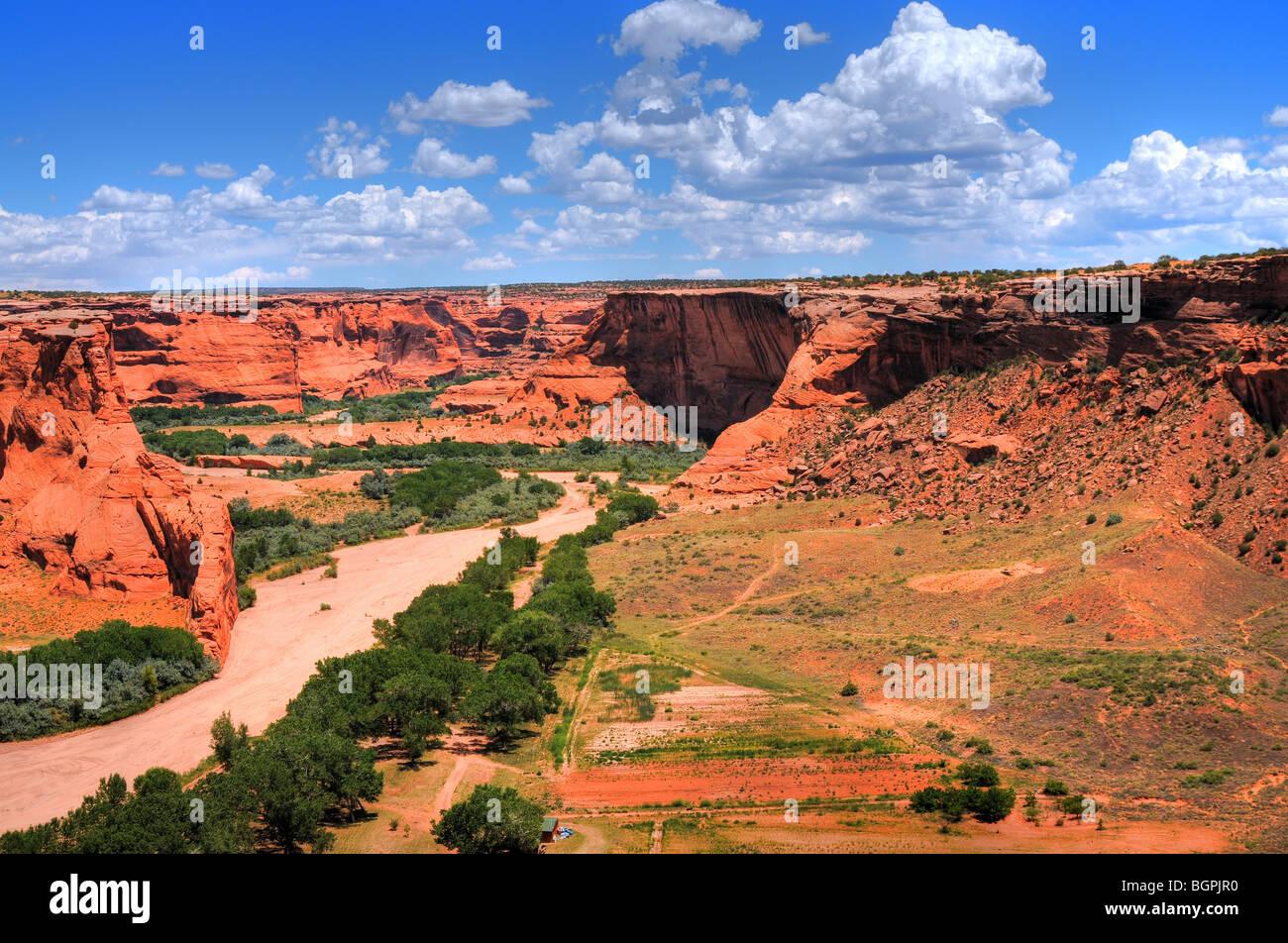
While the rim overlooks offer panoramic grandeur, the most profound views often come from within the canyon itself. To truly understand Canyon de Chelly, one must descend. This experience, however, is strictly regulated: all visits to the canyon floor, with the exception of the White House Ruin Trail, require a permitted Navajo guide. This regulation is crucial for protecting the fragile archaeological sites, respecting the privacy of resident Navajo families, and ensuring visitors understand the cultural significance of the landscape.
Hiring a Navajo guide for a jeep tour, horseback ride, or hike into the canyon transforms the viewing experience. From the canyon floor, the towering cliffs loom with an overwhelming presence, their scale difficult to fully grasp from above. Petroglyphs and pictographs that were mere blurs from the rim become vivid narratives, their colors and details striking. The sheer walls, often streaked with desert varnish, reveal intricate patterns and geological layers, telling a story of millennia of erosion.
Navajo guides, with their deep ancestral knowledge, bring the landscape to life. They point out medicinal plants, share oral traditions, and explain the significance of various rock formations and ancient sites. "These canyons are our first teachers," explains Leroy, a local Navajo guide. "Every rock, every stream, every ruin has a story. When you come down here, you’re not just looking at a pretty place; you’re stepping into our history, into our prayers."
From the floor, one gains a unique perspective on the agricultural life within the canyon, seeing peach orchards, cornfields, and sheep grazing against the backdrop of ancient dwellings. This living aspect, the seamless integration of past and present, is what truly sets Canyon de Chelly apart. It’s a view not just of nature, but of a continuous human relationship with the land spanning over 5,000 years, making it one of the longest continually inhabited landscapes in North America.
The Enduring Impression
Canyon de Chelly is more than a collection of stunning panoramas; it is an immersive journey into a landscape saturated with history, spirituality, and living culture. The best views are not just about what the eye perceives, but what the heart feels and the mind comprehends. Whether it’s the dizzying height of Spider Rock, the ancient whispers of White House Ruin, the quiet artistry of Antelope House, or the intimate revelations of a guided tour on the canyon floor, each vista contributes to a singular, unforgettable experience.
The changing light, from the soft pastels of dawn painting the cliff faces to the fiery reds and oranges of sunset, constantly transforms the canyon’s appearance. The silence, broken only by the cry of a raven or the rustle of wind, amplifies the sense of timelessness. Canyon de Chelly demands not just admiration, but reverence. It is a place that challenges perceptions, deepens understanding, and leaves an indelible mark on the soul – a truly crimson canvas painted by nature and human history, offering views that resonate far beyond the visual.


