
California, often celebrated for its golden beaches, towering redwoods, and innovative spirit, holds another, equally profound, layer of history and culture: its numerous Indian Reservations. These lands are much more than mere geographical locations; they represent the enduring legacy, sovereignty, and vibrant future of California’s diverse Native American tribes.
Understanding Indian Reservations in California requires delving into a complex tapestry of history, law, culture, and economic development. It’s a story of profound resilience in the face of immense challenges, and a testament to the strength and self-determination of indigenous peoples.
This comprehensive guide aims to shed light on the multifaceted world of California’s Indian Reservations, exploring their historical roots, legal status, economic contributions, cultural significance, and the ongoing efforts towards self-governance and community building.
Long before the arrival of European explorers, California was home to one of the most diverse and densely populated indigenous populations in North America. Hundreds of distinct tribes, speaking numerous languages, thrived across the state’s varied landscapes, each with unique cultures, traditions, and governance structures.
The Spanish colonial era, beginning in the late 18th century, brought devastating changes, including the mission system which forcibly relocated and assimilated Native peoples, leading to massive population decline and cultural disruption.
Following the Mexican-American War and California’s admission to the Union in 1850, the situation for Native Americans worsened dramatically. The Gold Rush era unleashed a period of violence, disease, and systematic displacement, often described as genocide, leading to further decimation of indigenous communities and the loss of ancestral lands.
In the mid-19th century, the U.S. government attempted to establish treaties with California tribes, promising land and resources. However, these treaties were ultimately rejected by the Senate, leaving California tribes largely landless and without federal recognition, a unique and tragic chapter in federal Indian policy.
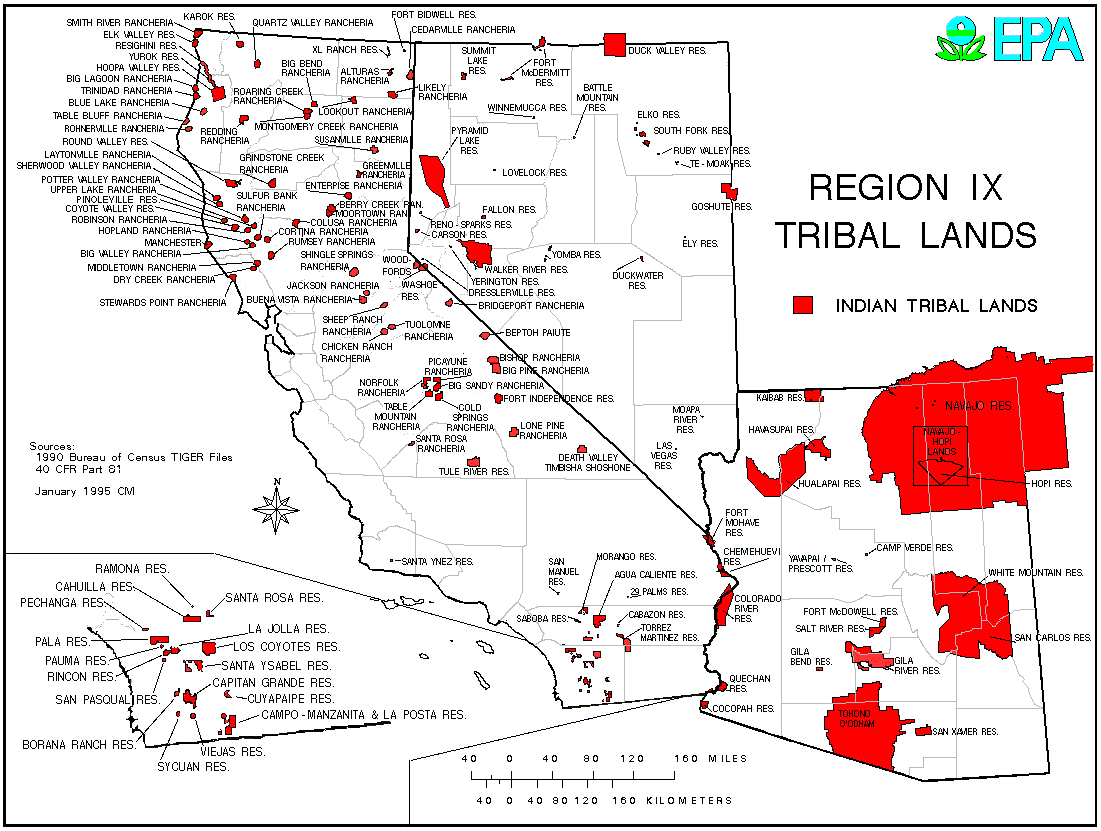
It wasn’t until the late 19th and early 20th centuries that smaller parcels of land, known as ‘reservations’ or ‘rancherias,’ were set aside for some California tribes. These were often marginal lands, a stark contrast to their vast ancestral territories.
A key concept in understanding Indian Reservations is tribal sovereignty. Federally recognized tribes are distinct political entities with inherent rights of self-governance, predating the formation of the United States. This means they have the authority to form their own governments, enact laws, and manage their lands and resources.
While reservations are located within the geographical boundaries of a state, they are not subject to state laws in the same way as private lands. Instead, they operate under a complex interplay of tribal, federal, and sometimes state law, particularly where federal law grants concurrent jurisdiction or delegates authority.
California is home to more federally recognized tribes than any other state in the U.S., with over 100 distinct tribal nations. This reflects the immense pre-contact diversity and the fragmented nature of land settlements and recognition efforts.
Unlike some larger, contiguous reservations found in other states, many California reservations, particularly the ‘rancherias,’ are relatively small in size, sometimes just a few acres. They are scattered across almost every county, from the remote mountains to the bustling urban fringes.
Each tribe possesses its own distinct culture, language, history, and governance. Examples include the Agua Caliente Band of Cahuilla Indians in Palm Springs, the Pechanga Band of Luiseño Indians near Temecula, and the Hoopa Valley Tribe in Northern California, among many others.
A significant turning point for many California tribes came with the passage of the Indian Gaming Regulatory Act (IGRA) in 1988. This federal law established the framework for tribal gaming, allowing tribes to operate casinos on their trust lands as a means of economic development and self-sufficiency.
Tribal gaming has transformed the economic landscape for many California reservations. Revenues from casinos have funded essential services like healthcare, education, housing, infrastructure development, and elder care for tribal members, dramatically improving quality of life.
Beyond gaming, many tribes are actively diversifying their economies. This includes ventures in hospitality, agriculture, renewable energy projects, retail, and cultural tourism, creating jobs not only for tribal members but also for residents of surrounding communities.
The economic impact extends far beyond tribal borders, generating billions of dollars in economic activity, supporting thousands of jobs, and contributing significantly to state and local tax revenues through various compact agreements and ancillary spending.
Despite historical pressures to assimilate, California tribes are fiercely dedicated to preserving and revitalizing their unique cultures. Language immersion programs are crucial, as many indigenous languages are critically endangered.
Traditional ceremonies, dances, arts, and storytelling are being revitalized and passed down to younger generations. Cultural centers and museums on reservations serve as vital hubs for education, both for tribal members and the broader public.
Protecting ancestral lands, sacred sites, and natural resources remains a paramount concern. Tribes are often at the forefront of environmental stewardship, drawing on centuries of traditional ecological knowledge to manage and protect their territories.
Despite significant progress, California’s Native American communities continue to face numerous challenges. These include disproportionately high rates of poverty, health disparities, and inadequate infrastructure, often stemming from historical injustices and underfunding.
Navigating the complex legal landscape between tribal, federal, and state jurisdictions can be challenging, particularly concerning law enforcement, taxation, and resource management. This often requires ongoing negotiation and advocacy to protect tribal rights.
Many tribes are actively involved in advocating for greater recognition, protection of their treaty rights (even those unratified), and increased federal and state support for their self-governance initiatives and community development projects.
Many California reservations welcome visitors, offering a unique opportunity to experience Native American culture firsthand. However, it is paramount to approach these visits with respect and cultural sensitivity.
Consider visiting tribal cultural centers, museums, and interpretive sites, many of which provide educational exhibits, art galleries, and opportunities to learn directly from tribal members. Support tribal businesses by purchasing authentic arts, crafts, and goods.
If visiting a tribal casino, remember that it is an economic engine supporting tribal communities. Be mindful of local customs and rules, and always ask permission before photographing individuals or participating in cultural events.
The future for California’s Native American tribes is one of continued self-determination and empowerment. Tribes are increasingly asserting their sovereignty, building stronger governments, and engaging in innovative economic and social development projects.
They are powerful advocates for environmental justice, cultural preservation, and equitable policies at both state and federal levels, ensuring their voices are heard and their rights are protected.
As California moves forward, recognizing and respecting the sovereignty and contributions of its Native American tribes is not just a matter of historical reconciliation, but a crucial step towards a more inclusive and just society for all.
In conclusion, Indian Reservations in California are vibrant, sovereign nations with a rich and complex history. They represent the enduring spirit of indigenous peoples, who have overcome immense adversity to preserve their cultures, govern their lands, and build thriving communities.
From the devastating impact of colonization to the economic revitalization spurred by tribal gaming, the journey of California’s Native American tribes is a powerful narrative of resilience, innovation, and unwavering commitment to their heritage.
Understanding and respecting these sovereign nations is essential for anyone seeking a complete picture of California’s past, present, and future. Their contributions to the state’s economy, culture, and environmental stewardship are invaluable and continue to grow.


