
The concept of Indian reservations in the United States is deeply rooted in a complex and often painful history, reflecting centuries of evolving federal policy, westward expansion, and shifting power dynamics between European settlers and Indigenous peoples. Far from a simple solution, their creation was the culmination of various motivations, legal maneuvers, and societal pressures that fundamentally reshaped the landscape of Native American life.
To truly understand why Indian reservations were created, one must first look back to the pre-colonial era. Before the arrival of Europeans, North America was home to hundreds of diverse and vibrant Indigenous nations, each with its own distinct cultures, languages, governance systems, and intricate relationships with their ancestral lands. These lands were not merely property but were integral to their spiritual, cultural, and economic well-being.
The initial encounters between European explorers and Native American tribes were varied, ranging from trade and alliances to conflict. However, a fundamental clash of worldviews quickly emerged, particularly concerning land ownership. European colonizers introduced concepts of private property and exclusive territorial claims, starkly contrasting with Indigenous understandings of communal use and stewardship.
As European settlements grew, so did the pressure for land. Early treaties, often signed under duress or misunderstanding, began the process of land cessions, where Native American tribes relinquished vast territories in exchange for goods, protection, or promises of undisturbed possession of remaining lands. These early agreements, however, were frequently violated by settlers and colonial governments.
The early American republic inherited this complex relationship. Presidents like Thomas Jefferson, while sometimes expressing paternalistic concern, also envisioned the eventual removal of Native Americans from lands desired by white settlers. His policies often aimed at ‘civilizing’ Indigenous peoples, encouraging them to adopt farming and sedentary lifestyles, while simultaneously eyeing their ancestral territories for expansion.
The 19th century ushered in a period of intense westward expansion, fueled by ideologies like Manifest Destiny – the belief in America’s divinely ordained right to expand across the continent. This relentless drive for land, resources, and settlement became a primary catalyst for the systematic displacement of Indigenous populations.
One of the most devastating policies was the ‘Indian Removal’ era, epitomized by the Indian Removal Act of 1830. This legislation, signed by President Andrew Jackson, authorized the forced relocation of numerous Southeastern Native American tribes – including the Cherokee, Choctaw, Chickasaw, Creek, and Seminole – from their ancestral homes to lands west of the Mississippi River, primarily present-day Oklahoma.
The infamous ‘Trail of Tears’ is perhaps the most poignant symbol of this era, where thousands of Cherokee people died during their forced march. This period established a precedent for federal power over Indigenous lands and set the stage for the formal reservation system.
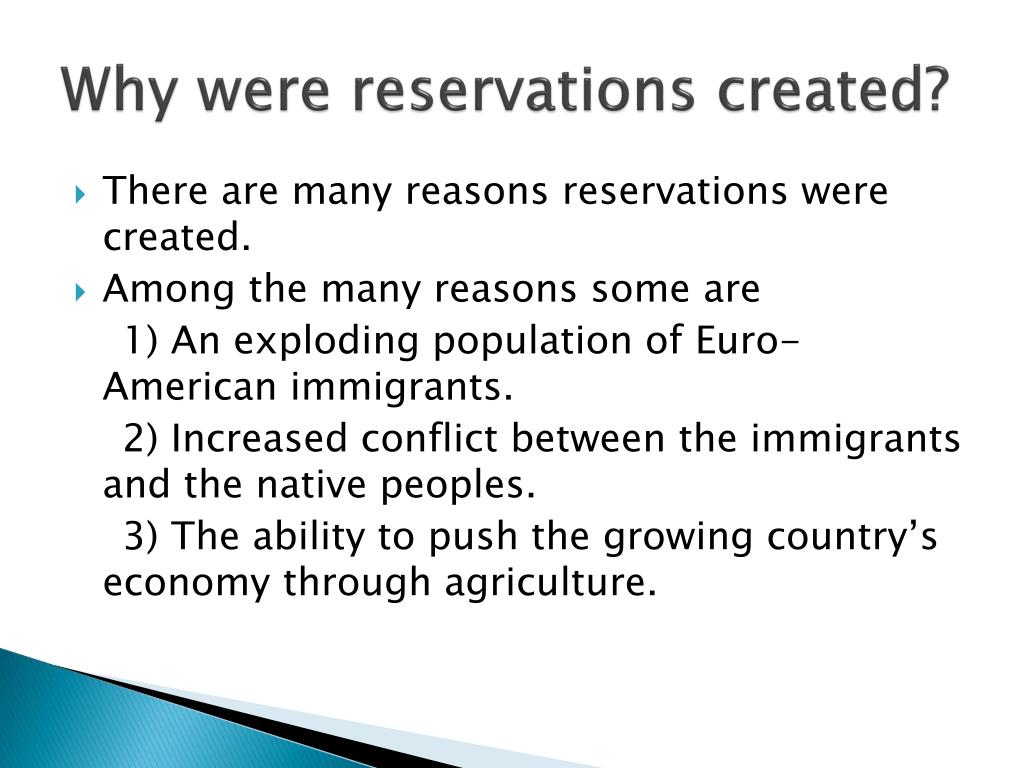
- To Facilitate Westward Expansion: Clearing desirable lands for white settlers, railroads, and resource extraction (e.g., gold rushes).
- To Minimize Conflict: From the U.S. perspective, concentrating Native Americans was seen as a way to reduce skirmishes with settlers and maintain order on the frontier.
- To ‘Civilize’ and Assimilate: Reservations were often viewed as laboratories for assimilation, where Native Americans would be taught farming, Christianity, and Euro-American customs, abandoning their traditional ways.
- Perceived Humanitarianism: Some policymakers genuinely believed that reservations would protect Native Americans from the corrupting influences of white society and provide a controlled environment for their ‘advancement.’
- Resource Acquisition: The lands designated as reservations were often those deemed less desirable by settlers at the time, or were strategically chosen to allow access to valuable resources outside their boundaries.
The legal framework underpinning the reservation system was complex and often contradictory. Treaties, though frequently broken or renegotiated under duress, were initially the primary mechanism for establishing reservation boundaries. However, as the 19th century progressed, Congress increasingly asserted its plenary power over Native American affairs, eventually ending treaty-making in 1871.
Key Supreme Court decisions in the 1830s, such as Cherokee Nation v. Georgia and Worcester v. Georgia, recognized Native American tribes as ‘domestic dependent nations,’ possessing a degree of sovereignty but ultimately subject to federal authority. This legal status laid the groundwork for the federal government’s unique trust responsibility to tribal nations.
The Bureau of Indian Affairs (BIA), established in 1824 and later transferred to the Department of the Interior, became the primary administrative body overseeing reservations. Its role was to manage federal funds, resources, and policies related to Native American tribes, often acting as a powerful, sometimes paternalistic, intermediary between tribes and the federal government.
Life on the newly established reservations was incredibly challenging. Tribes, often forcibly relocated from their ancestral lands, faced immense difficulties adapting to new environments and agricultural practices. Traditional hunting grounds were lost, cultural practices suppressed, and economic self-sufficiency undermined.
Poverty, disease, and malnutrition became rampant. The federal government’s promises of annuities, food, and supplies were often inadequate, delayed, or outright broken. Native American children were frequently removed from their families and sent to boarding schools, where they were forbidden to speak their native languages or practice their cultural traditions, in a deliberate effort to ‘kill the Indian, save the man.’
Despite these immense hardships, Native American communities on reservations demonstrated remarkable resilience. They found ways to preserve their cultures, languages, and spiritual practices, often in secret, and adapted to new circumstances while maintaining their identities.

Towards the end of the 19th century, a new policy emerged that aimed to further dismantle tribal communal structures: the General Allotment Act of 1887, commonly known as the Dawes Act. This act sought to break up communally held reservation lands into individual parcels, typically 80 or 160 acres, to be assigned to individual Native American families.
The stated purpose of the Dawes Act was to encourage individual land ownership and assimilate Native Americans into mainstream American society by turning them into independent farmers. However, its actual effect was devastating. After allotments were made, millions of acres of so-called ‘surplus’ reservation land were then sold off to non-Native settlers, drastically shrinking the land base of many tribes.
The Dawes Act resulted in massive land loss – an estimated two-thirds of the remaining Native American land base was lost between 1887 and 1934. It also fragmented tribal communities, complicated land ownership, and further eroded traditional governance structures and cultural practices.
The early 20th century saw continued struggles, but also the beginnings of reform. The Indian Reorganization Act of 1934, part of President Franklin D. Roosevelt’s ‘Indian New Deal,’ marked a significant shift. It ended the allotment policy, encouraged tribal self-governance, and aimed to revitalize Native American cultures and economies.
While not without its flaws, the IRA laid the groundwork for modern tribal governments and strengthened the concept of tribal sovereignty. The latter half of the 20th century saw the emergence of the self-determination era, where tribes gained greater control over their own affairs, including education, healthcare, and economic development.
Today, Indian reservations, now often referred to as ‘tribal nations’ or ‘Indian Country,’ are diverse and dynamic entities. They continue to grapple with the historical legacy of their creation, including issues of poverty, inadequate infrastructure, and the ongoing struggle for full recognition of their sovereignty and treaty rights.
However, they are also vibrant centers of cultural preservation, economic innovation, and political advocacy. Tribal governments operate schools, healthcare facilities, police forces, and businesses, demonstrating remarkable self-governance and a commitment to their communities’ future.
In conclusion, the creation of Indian reservations was not a singular event but a protracted historical process driven by a complex interplay of land hunger, expansionist ideologies, federal policies, and efforts to control and assimilate Native American populations. From early land cessions to forced removals and the establishment of designated territories, the motivations ranged from perceived humanitarianism to outright resource acquisition and cultural suppression.
This history is a testament to the profound challenges faced by Indigenous peoples, but equally, it highlights their enduring strength, resilience, and unwavering determination to preserve their cultures and assert their inherent sovereignty in the face of immense adversity. Understanding this past is crucial for comprehending the present realities and future aspirations of Native American nations in the United States.


