
The vast, frozen expanses of the Arctic are home to a culture deeply intertwined with the rhythms of the sea and the lives of its magnificent inhabitants. For the Inupiat people of coastal Alaska, the annual bowhead whale harvest is far more than a subsistence activity; it is a profound cultural cornerstone, a testament to millennia of resilience, and a vital link to their ancestral heritage. This comprehensive article delves into the intricate world of the Inupiat bowhead whale harvest, exploring its historical roots, cultural significance, sustainable practices, and the modern challenges it faces.
Understanding the Inupiat bowhead whale harvest requires looking beyond the act of hunting and appreciating the holistic connection between the people, the whale, and the environment. It is a practice steeped in tradition, governed by elaborate protocols, and sustained by a deep respect for the marine ecosystem. Far from a commercial endeavor, this harvest is fundamentally about food security, cultural identity, and community cohesion in some of the world’s most challenging environments.
For thousands of years, the Inupiat have relied on the bowhead whale (Balaena mysticetus) as a primary source of sustenance, materials, and cultural inspiration. These majestic marine mammals, capable of living for over 200 years, thrive in the Arctic and sub-Arctic waters, migrating through areas accessible to Inupiat communities. The knowledge passed down through generations—about whale behavior, ice conditions, and hunting techniques—is invaluable and forms the bedrock of their survival.
The communities participating in this harvest are primarily located along the Bering, Chukchi, and Beaufort Seas of Alaska, stretching from areas like Barrow (Utqiagvik) to Point Hope and Kaktovik. Each community has its own whaling crews, deeply rooted in family lineages and traditional responsibilities, all contributing to a collective effort that defines much of their annual cycle.
Understanding the Bowhead Whale: An Arctic Giant
The bowhead whale is uniquely adapted to life in the Arctic, possessing a massive skull capable of breaking through sea ice up to 60 cm thick. They are filter feeders, consuming vast quantities of zooplankton, and play a crucial role in the Arctic marine ecosystem. Their immense size and longevity make them a symbol of strength and resilience, revered by the Inupiat.

Conservation efforts and scientific research have shown that the Western Arctic bowhead whale population, the stock hunted by the Inupiat, is robust and healthy. This population has been steadily increasing, a success story often attributed to careful management and the cessation of commercial whaling activities in the region decades ago. The sustainability of the Inupiat harvest is a key factor in its continued legality and acceptance.
The Heart of Subsistence Whaling: Why It Matters
At its core, Inupiat whaling is a matter of subsistence. In remote Arctic villages, fresh produce and imported meats are prohibitively expensive and often scarce. The bowhead whale provides an unparalleled source of nutrient-rich food, including protein, fats, and vitamins essential for health in a cold climate. Muktuk, the skin and blubber of the whale, is a particularly prized delicacy, rich in Vitamin C and D.
Beyond nutrition, the harvest is an anchor for cultural identity and spiritual connection. The act of whaling reinforces traditional values of sharing, cooperation, respect for elders, and gratitude towards the animal. It is an event that unifies entire communities, with everyone, from the youngest child to the oldest elder, playing a role in the success of the hunt and the subsequent distribution of meat.
The economic impact, while not commercial, is significant within the communities. The harvest reduces reliance on expensive imported foods, allowing families to allocate resources elsewhere. Furthermore, the sharing of the whale meat strengthens social bonds and acts as a form of social security, ensuring that no one in the community goes without food.
Traditional Practices and Modern Stewardship: The Hunt Itself
The bowhead whale harvest is a meticulous and demanding undertaking, requiring immense skill, patience, and coordination. Preparations begin months in advance, involving the readying of equipment, spiritual observances, and careful monitoring of ice and weather conditions. Whaling captains, often chosen for their experience and wisdom, lead the crews, guiding them through the treacherous Arctic waters.
When the time is right, typically in spring and fall during the whale migrations, crews launch their traditional boats (umiaq). The hunt itself is a blend of ancient knowledge and modern technology. While traditional harpoons with floats are still central, satellite phones, GPS, and powerful outboard motors aid in navigation and communication, enhancing safety and efficiency.
The successful harvest of a whale is a monumental community effort. Once a whale is taken, it is towed to the ice edge or shore. The entire community mobilizes to participate in the arduous process of butchering, known as nalukataq. This involves skillfully cutting and distributing the meat and muktuk, ensuring equitable sharing among all families and contributing to the communal freezer.
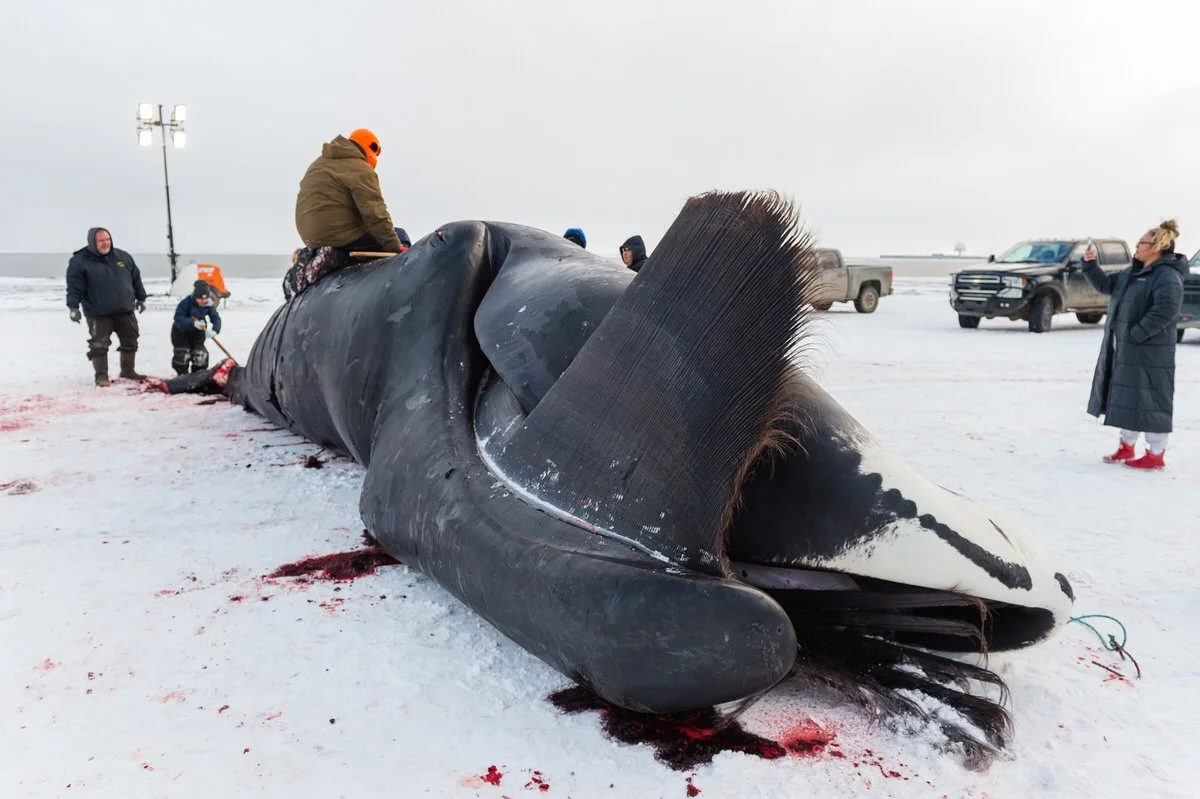
The distribution of the whale is a highly formalized process, reinforcing social structures and ensuring that everyone benefits. The captain of the successful whaling crew holds significant responsibility for the fair division. This sharing system is a cornerstone of Inupiat society, embodying principles of generosity and mutual support.
Following a successful hunt, communities often hold a celebratory feast, also called nalukataq (or Blanket Toss celebration), where whale meat is shared, and the traditional blanket toss is performed. These events are joyous expressions of gratitude, community spirit, and cultural pride, cementing the bonds between families and celebrating their enduring connection to the land and sea.
Regulation and Oversight: Ensuring Sustainability
The Inupiat bowhead whale harvest is one of the most rigorously managed aboriginal subsistence hunts in the world. It operates under a strict quota system established by international and national bodies, ensuring the long-term sustainability of the bowhead whale population.
The International Whaling Commission (IWC), the global body responsible for the conservation of whales and the management of whaling, sets catch limits for aboriginal subsistence whaling. The IWC recognizes the cultural and nutritional needs of indigenous communities like the Inupiat and provides for specific quotas.
In the United States, the National Oceanic and Atmospheric Administration (NOAA) Fisheries implements the IWC’s quotas and oversees the harvest. They work closely with local organizations to monitor the hunt, collect data, and ensure compliance with regulations.
The Alaska Eskimo Whaling Commission (AEWC) plays a critical role in local management. Comprised of whaling captains from the eleven Inupiat and Yup’ik whaling villages, the AEWC allocates the IWC/NOAA quota among its member communities, develops rules for safe and humane hunting, and works to preserve whaling traditions. This co-management approach empowers indigenous communities in the stewardship of their resources.
Through this multi-layered system of international, federal, and local oversight, the bowhead whale population is carefully monitored, and the harvest is kept well within sustainable limits, demonstrating a successful model of conservation and cultural preservation.
Addressing Common Questions
Is Inupiat Bowhead Whaling Legal and Sustainable? Yes, absolutely. As outlined, it is strictly regulated by international (IWC) and national (NOAA Fisheries) bodies, with direct involvement from the Alaska Eskimo Whaling Commission. The Western Arctic bowhead whale population is healthy and growing, and the harvest levels are set to ensure its continued recovery and stability.
What is Muktuk and its Importance? Muktuk is the skin and blubber of the bowhead whale, typically eaten raw, frozen, or fermented. It is a highly prized traditional food, not only for its unique taste and texture but also for its exceptional nutritional value, providing essential fats, protein, and notably, Vitamin C and D, which are critical in a diet where fresh fruits and vegetables are scarce.
How Does Climate Change Affect the Harvest? Climate change poses significant challenges. Warmer temperatures lead to thinner, less stable sea ice, which impacts traditional hunting routes, makes travel more dangerous, and can alter whale migration patterns. Changes in ocean currents and prey availability could also affect whale health and distribution, creating uncertainty for future harvests.
What are the Tools and Techniques Used? While traditional knowledge guides the hunt, modern tools are integrated for safety and efficiency. Crews use specialized rifles to ensure a quick and humane kill after a harpoon strike. Spotting scopes, binoculars, and radar assist in locating whales and navigating through ice. The blend of ancestral wisdom with contemporary technology exemplifies adaptive cultural practice.
Beyond Food: What Other Uses Does the Whale Provide? Historically, every part of the whale was utilized. Whale oil provided fuel for lamps and heat. Bones were used for tools, housing structures, and artistic carvings. Baleen (filter plates in the whale’s mouth) was used for baskets, sled runners, and even fashion. Today, while food is primary, bones and baleen are still used for traditional arts and crafts, continuing a legacy of resourcefulness.
Challenges and the Future
Despite its careful management, the Inupiat bowhead whale harvest faces ongoing challenges. Environmental threats, particularly from climate change, are paramount. The unpredictable nature of sea ice and changing ocean conditions directly impacts the safety and success of the hunt. Potential industrial development, such as offshore oil and gas exploration, also poses risks of habitat disruption and oil spills, which could devastate marine life.
Cultural preservation in a rapidly changing world is another significant concern. While the harvest remains strong, ensuring that younger generations continue to learn the skills, language, and values associated with whaling is crucial for its long-term viability. The influence of modern society and the lure of urban living can draw youth away from traditional practices.
The Inupiat people are actively engaged in balancing their deep-rooted traditions with the demands and opportunities of the modern world. They advocate for their rights as indigenous peoples, participate in scientific research, and share their traditional ecological knowledge to inform conservation efforts and policy-making.
The dialogue surrounding indigenous whaling is complex, often misunderstood by those outside Arctic cultures. It highlights the importance of respecting diverse ways of life and recognizing the profound interconnections between human communities and the natural world, particularly when it comes to sustainable resource management.
In conclusion, the Inupiat bowhead whale harvest is a vibrant, living tradition that embodies the resilience, ingenuity, and profound cultural heritage of the Inupiat people. It is a testament to sustainable living in one of the world’s harshest environments, carefully managed to ensure the health of both the whale population and the communities that depend on it.
Far from a relic of the past, this harvest is a dynamic practice that continues to adapt, integrating modern tools while upholding ancient values. It serves as a powerful reminder of humanity’s ability to live in balance with nature, providing essential lessons in food security, cultural identity, and environmental stewardship for the global community.


