Havasupai: The Blue-Green Water People of the Grand Canyon’s Hidden Paradise
Deep within the ochre embrace of the Grand Canyon, where the colossal walls carve the sky into slivers of cerulean, lies a sanctuary unlike any other: Havasupai. This isn’t merely a destination; it is a living, breathing testament to nature’s artistry and the enduring spirit of the Havasupai Tribe, "The People of the Blue-Green Water." Their ancestral lands, nestled within a side canyon accessible only by a challenging trek, mule, or helicopter, hold an unparalleled spectacle of cascading waterfalls and cerulean pools, a stark, vibrant contrast to the arid desert that surrounds them.
The journey to Havasupai begins long before the first step on the dusty trail. It starts with the coveted permit, a testament to the tribe’s commitment to preserving their sacred homeland and managing the delicate balance of tourism. Securing one is akin to winning a lottery, underscoring the exclusivity and the profound privilege of experiencing this hidden paradise. Once granted, the 10-mile descent from Hualapai Hilltop to Supai Village, the remote tribal capital, is a pilgrimage. The path, etched into ancient rock, winds through a landscape sculpted by millennia of wind and water, gradually revealing glimpses of the burgeoning green that signals the proximity of the precious Havasu Creek.
This isn’t just water; it’s liquid emerald and sapphire, a phenomenon born from geology and time. The creek’s distinctive blue-green hue is attributed to a high concentration of calcium carbonate, which it absorbs as it flows through limestone. This mineral-rich water then deposits travertine, a type of limestone, forming natural dams and terraces that sculpt the iconic waterfalls and pools. The result is a series of breathtaking cascades, each with its own character, inviting weary travelers into their refreshing embrace.
The Havasupai Tribe, numbering around 600 members, has called this canyon home for over 800 years. Their name, Havasupai, literally translates to "people of the blue-green water" (Havasu meaning ‘blue-green water’ and Pai meaning ‘people’), a direct reflection of their inextricable connection to the life-giving creek. For centuries, they lived a semi-nomadic existence, farming the fertile canyon floor in summer and moving to the plateau for hunting in winter. However, the encroachment of European settlers and the establishment of the Grand Canyon National Park in 1919 drastically reduced their ancestral lands, confining them to a mere 518 acres. A pivotal moment came in 1975 with the passage of the Grand Canyon National Park Enlargement Act, which returned over 185,000 acres of their traditional lands to the tribe, including the entire Havasu Canyon. This historic act reaffirmed their sovereignty and their right to self-determination, cementing their role as custodians of this pristine environment.
The heart of Havasupai’s allure lies in its magnificent waterfalls, each a unique masterpiece. The first and arguably most famous, Havasu Falls, greets visitors with a majestic 100-foot drop into a series of vivid turquoise pools. Its wide, curtain-like cascade and the inviting pools beneath make it a quintessential image of paradise. The travertine deposits continuously reshape the falls, creating new formations and giving the landscape a dynamic, ever-changing quality. It’s a place where the vibrant greens of the cottonwood trees frame the electric blue water, creating a scene that feels almost surreal.

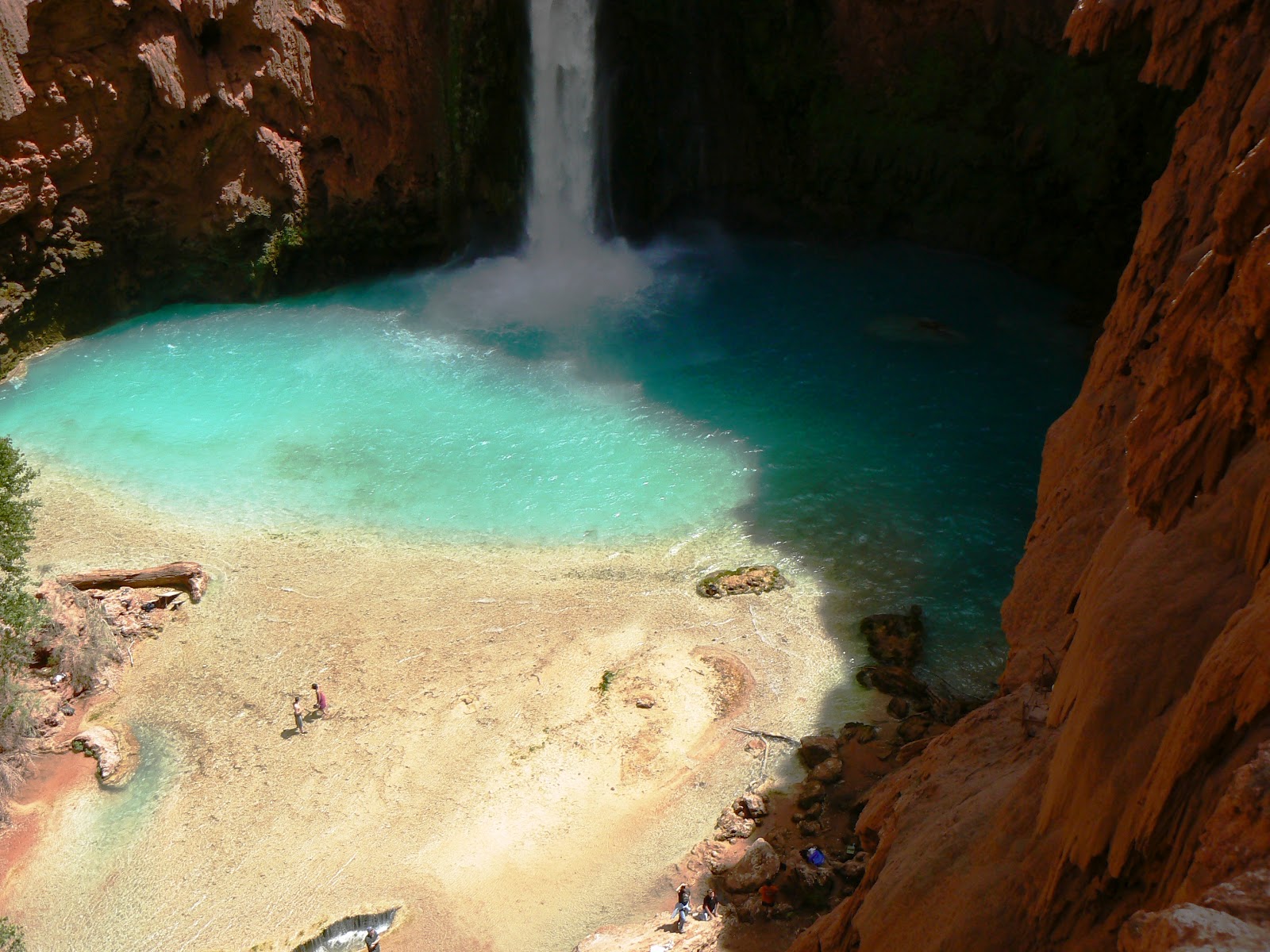
Further downstream lies Mooney Falls, a formidable 200-foot plunge, named after a miner who, legend has it, fell to his death attempting to scale it. Reaching the base of Mooney is an adventure in itself, involving a descent down a sheer cliff face via chains, ladders, and carved footholds – a thrilling challenge that rewards the intrepid with an up-close encounter with its powerful roar and mist. The pools at its base are deeper and often less crowded, offering a more secluded swimming experience.
Beyond Mooney, the canyon opens up, and the journey continues to Beaver Falls. This multi-tiered waterfall, a series of smaller cascades and pools spanning a considerable distance, offers ample opportunities for exploration, swimming, and even cliff jumping from various heights. The path to Beaver Falls involves multiple creek crossings, adding to the immersive wilderness experience. Before reaching Beaver, the canyon also hosts Fifty Foot Falls and the New Navajo Falls (the original Navajo Falls was rerouted and largely destroyed by a catastrophic flood in 2008, showcasing the raw power of nature to reshape even the most enduring landscapes). Each fall, whether grand or intimate, contributes to the symphony of water that defines Havasupai.
For the Havasupai people, the water is more than just a resource; it is sacred. It is the lifeblood of their culture, their economy (primarily through tourism), and their spiritual existence. They emphasize the importance of respecting the land, the water, and their community. Visitors are guests on sovereign land, and strict rules are in place to ensure the preservation of this fragile ecosystem. Littering is strictly forbidden, and visitors are expected to pack out everything they pack in. Alcohol and drones are prohibited, and respectful behavior is paramount. "The land is our mother; we must protect her," a common sentiment among the tribe, underscores their deep reverence and stewardship. This isn’t just a picturesque backdrop; it’s a living entity integral to their identity.
The allure of Havasupai extends beyond its visual splendor. It offers a profound escape from the modern world, a digital detox where the only notifications are the calls of birds and the rush of water. The physical challenge of the hike, the remoteness, and the sheer beauty combine to create an experience that often borders on the spiritual. It’s a place where one feels truly disconnected from the everyday and intimately connected to the raw power and tranquility of nature. The sense of accomplishment upon reaching the campgrounds after miles of hiking, then cooling off in the surreal blue-green waters, is a memory etched deeply into the psyche of every visitor.
However, this hidden paradise faces contemporary challenges. The increasing demand for permits, while economically vital for the tribe, puts pressure on the delicate environment and infrastructure. Climate change poses a threat to water levels and the frequency of flash floods. The Havasupai Tribe stands at the forefront of balancing sustainable tourism with the preservation of their cultural heritage and natural resources. Their careful management ensures that Havasupai remains a sanctuary, not just for visitors seeking beauty, but for the tribe who call it home and for the blue-green waters that define their very existence.
Havasupai is more than just a series of stunning waterfalls in the Grand Canyon. It is a vibrant cultural landscape, a testament to the resilience of a people who have thrived for centuries against immense odds. It is a powerful reminder of nature’s breathtaking beauty and the critical importance of stewardship. To visit Havasupai is not merely to see beautiful scenery; it is to step into a sacred space, to witness the profound connection between a people and their land, and to emerge with a deeper appreciation for the blue-green heart of the Grand Canyon.


