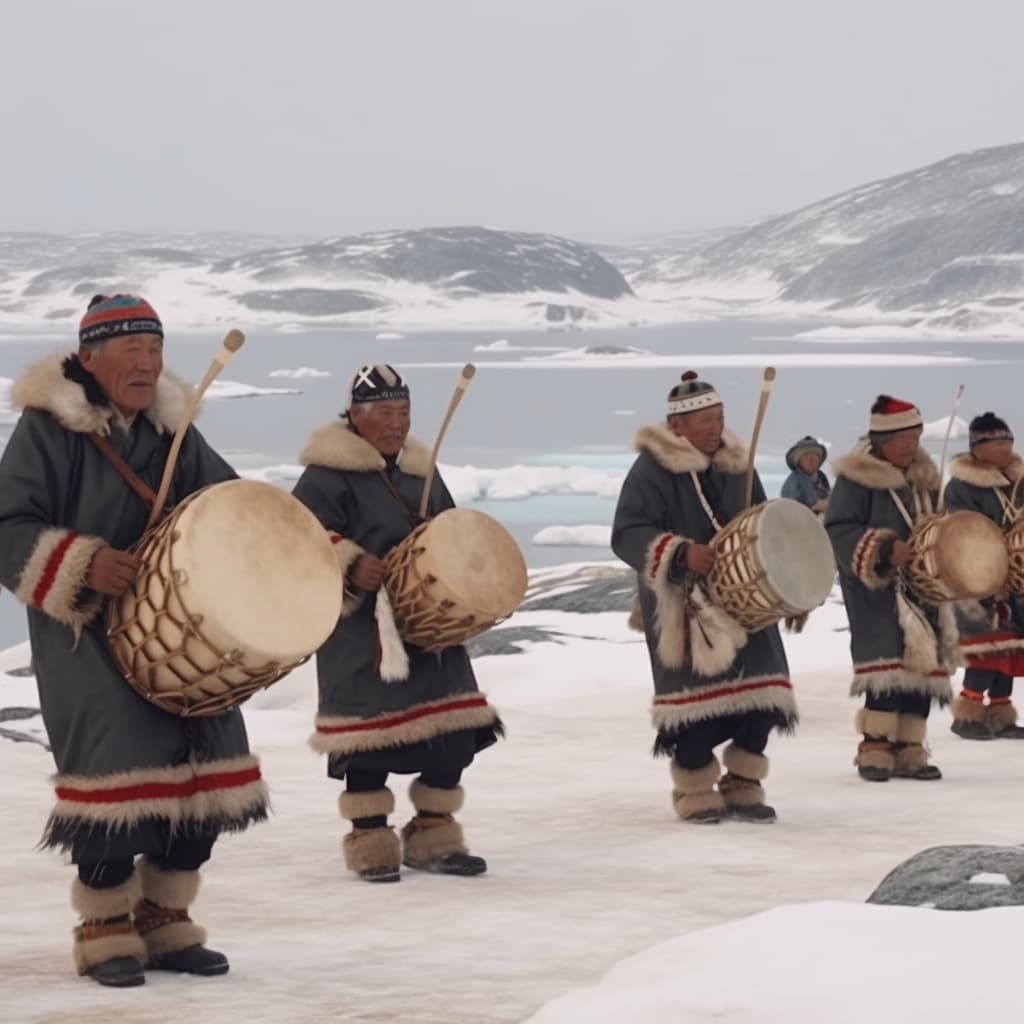
The Arctic, a vast and often misunderstood expanse, is not merely a frozen frontier but a vibrant tapestry of human cultures, languages, and ancient traditions forged in the crucible of extreme environments. Far from a monolithic entity, the Arctic is home to diverse indigenous peoples whose languages are intricate reflections of their unique relationship with the land, ice, and sea, embodying millennia of accumulated knowledge and spiritual wisdom. These languages are not just communication tools; they are the very DNA of cultural survival, carrying stories, histories, and ways of life passed down through generations.
The linguistic landscape of the Arctic is dominated by several major language families, each with its own distinct branches and dialects, showcasing an incredible resilience in the face of immense environmental and historical pressures.
The Eskimo-Aleut Family: Masters of the Ice and Sea
Perhaps the most widely recognized Arctic language family is Eskimo-Aleut, spanning across Alaska, Canada, Greenland, and parts of Siberia. This family is traditionally divided into two main branches: Aleut and Eskimo.
Aleut, spoken by the Unangan people of the Aleutian Islands and parts of Alaska, is a critically endangered language with only a handful of fluent speakers remaining. Its intricate grammar and vocabulary are deeply tied to maritime life, reflecting sophisticated knowledge of currents, marine animals, and boat-building techniques crucial for survival in the Bering Sea.
The Eskimo branch further divides into Yupik and Inuit. Yupik languages are spoken across central Alaska and parts of Siberia, with distinct variants like Central Alaskan Yup’ik, Alutiiq (Sugpiaq), Siberian Yupik, and Naukan Yupik. These languages are rich in descriptive terms for the nuances of their environment – the textures of snow, the behavior of seals, the patterns of ice. For example, Central Alaskan Yup’ik is known for its complex polysynthetic structure, where a single "word" can convey a sentence-worth of meaning through a series of suffixes, demonstrating a concise yet deeply descriptive linguistic approach. Cultural traditions among Yupik speakers often revolve around elaborate masked dances, storytelling, and a deep reverence for the animals that sustain them, particularly seals and caribou.
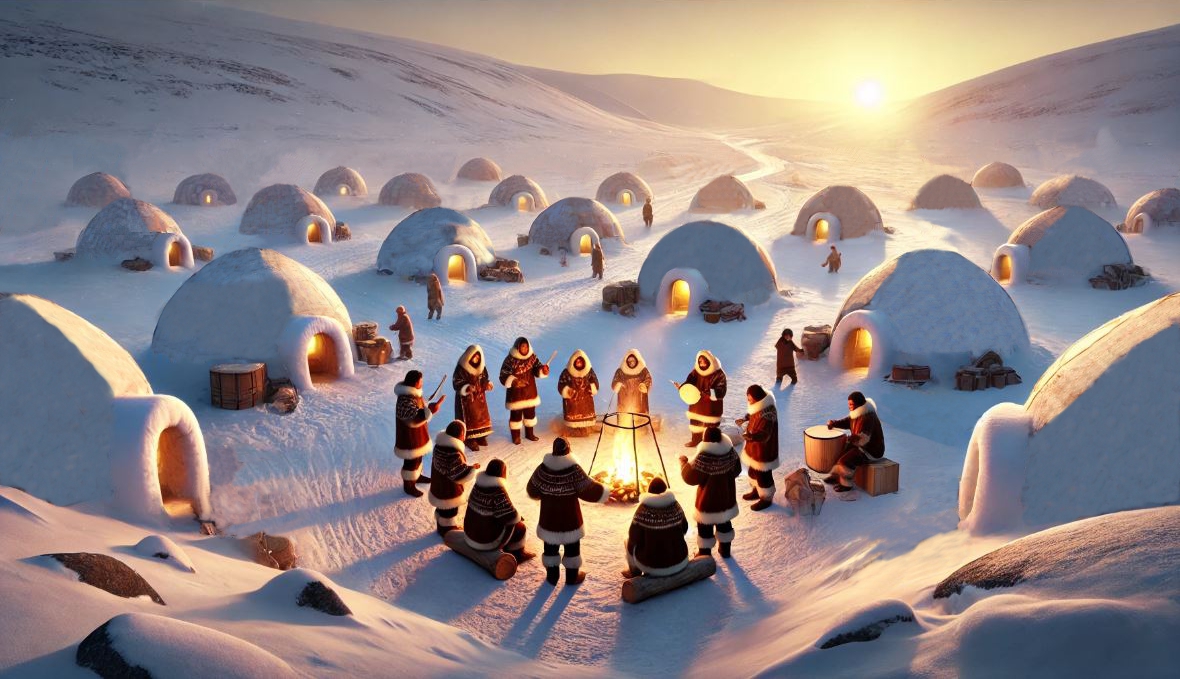
The Inuit languages, collectively known as Inuktitut in Canada, Inupiaq in Alaska, and Kalaallisut in Greenland, form a dialect continuum stretching thousands of kilometers. Kalaallisut, the official language of Greenland, boasts the largest number of speakers, while Inuktitut in Canada is experiencing a revitalization through language immersion programs and media. These languages are renowned for their extensive vocabulary related to snow, ice, and marine life, often misunderstood as simply having "many words for snow." In reality, it’s their sophisticated morphological system that allows for an infinite number of precise descriptions of snow and ice conditions, critical for navigation, hunting, and safety in the Arctic environment. For instance, words like "qanik" (falling snow), "aput" (snow on the ground), "pukak" (granular snow), and "siku" (ice in general) are just building blocks in a system that can describe virtually any state or condition of frozen water.
Inuit cultural traditions are deeply intertwined with their language. Oral storytelling, often involving trickster figures like Raven or epic tales of survival, serves to transmit history, ethics, and practical knowledge. The art of carving from soapstone, bone, and ivory depicts animals and spirits, reflecting a worldview where the natural and spiritual realms are closely connected. Throat singing (katajjaq) among Inuit women is a unique vocal art form, often performed as a playful competition, mimicking natural sounds and demonstrating remarkable breath control. The construction and use of the "qajaq" (kayak) and "umiaq" (open boat) are central to their maritime hunting traditions, and the terms for their intricate parts are embedded in the language, reflecting centuries of engineering wisdom.
The Uralic Family: The Sámi and Their Reindeer
Moving across to Northern Europe, the Uralic language family introduces us to the Sámi, the only indigenous people of Europe. Their ancestral lands, known as Sápmi, stretch across parts of Norway, Sweden, Finland, and Russia’s Kola Peninsula. Sámi languages are a group of ten distinct languages, many of which are critically endangered, such as Ume Sámi and Pite Sámi, with only a handful of elderly speakers. North Sámi, Lule Sámi, and South Sámi are the most widely spoken, benefiting from educational and cultural revitalization efforts.
Sámi languages are characterized by their rich vocabulary related to reindeer herding, the landscape, and family relations. Terms for different types of reindeer based on age, sex, color, and behavior are incredibly detailed, reflecting the profound symbiotic relationship between the Sámi and their herds. The practice of "joik," a traditional Sámi form of singing, is unique. A joik is not merely about something or someone; it is that person, animal, or place, expressing their essence and spirit through vocalizations that often mimic nature.
Sámi cultural traditions are deeply rooted in their connection to the land and reindeer. Their traditional clothing, the "gákti," is vibrant and highly symbolic, varying in style and ornamentation across different Sámi regions. "Duodji," Sámi handicrafts, including intricate knife handles, leather goods, and woven bands, are not just utilitarian but carry deep cultural meaning and artistic expression. Sámi society has historically been organized around the seasonal movements of reindeer, and while modern life has brought significant changes, the bond with nature and traditional knowledge remains strong. The Sámi have also been pioneers in indigenous rights, with their own parliaments in Norway, Sweden, and Finland, advocating for their linguistic and cultural preservation.
Paleo-Siberian Languages: Ancient Voices of the East
In the vast and remote reaches of Siberian Arctic, we encounter the "Paleo-Siberian" languages – a term that groups several unrelated or distantly related language families and isolates, characterized by their ancient origins and often small speaker populations. These languages offer unique insights into the earliest human migrations and linguistic diversity of the Arctic.
The Chukotko-Kamchatkan family includes Chukchi, Koryak, Alyutor, and Itelmen. Chukchi, spoken on the Chukotka Peninsula, is known for its ergative-absolutive grammar and its intricate system of verbal agreement. The Chukchi people are traditionally nomadic reindeer herders and sea mammal hunters, and their language reflects this lifestyle with precise terminology for their animals and the harsh environment. Koryak, spoken south of the Chukchi, shares many cultural and linguistic traits, while Itelmen, spoken on the Kamchatka Peninsula, is critically endangered. These cultures are rich in shamanistic traditions, animistic beliefs, and elaborate oral histories that explain the origins of their world and their place within it.
The Yeniseian languages, once a larger family, are now represented by a single survivor: Ket. Spoken by fewer than 50 people along the Yenisei River, Ket is a linguistic isolate, meaning it has no known relatives – though recent research suggests a controversial link to the Na-Dene languages of North America (e.g., Navajo, Apache). Ket is a tonal language with complex morphology, and its survival is a testament to the resilience of its speakers. The Ket traditionally lived as hunter-gatherers and fishermen, and their language holds clues to ancient Siberian lifeways.
Yukaghir, another critically endangered family, consists of Tundra Yukaghir and Kolyma Yukaghir, spoken in isolated pockets of northeast Siberia. These languages are also characterized by their unique grammatical structures and a rich oral tradition of myths and legends, often featuring animal spirits and epic journeys.
Finally, Nivkh, spoken by the Nivkh people on Sakhalin Island and the lower Amur River, is a language isolate with no known genetic relations. Nivkh culture is strongly tied to fishing and hunting, and their language reflects a deep understanding of marine and riverine ecosystems. Their traditional spiritual practices involve a complex cosmology of spirits inhabiting nature.
Cross-Cutting Cultural Traditions and Challenges
Despite their linguistic diversity, Arctic indigenous cultures share several profound commonalities. Oral tradition and storytelling are paramount, serving as primary vehicles for transmitting history, law, ethics, practical skills, and spiritual beliefs. Elders are revered as living libraries, their knowledge essential for survival and cultural continuity.
The intimate connection to the land, ice, and sea is a defining characteristic. Arctic languages are not abstract; they are deeply contextual, reflecting a worldview where humans are an integral part of the ecosystem, not separate from it. This deep ecological knowledge, honed over millennia, is encoded in their vocabulary and grammar, offering sustainable ways of living in extreme conditions.
Art and expressive culture are central to identity. From the intricate carvings of the Inuit to the vibrant duodji of the Sámi, and the shamanistic drums of Siberian peoples, art is a means of spiritual connection, storytelling, and cultural preservation. Music and song, like the joik and throat singing, are living expressions of their unique heritage.
However, these rich linguistic and cultural tapestries face immense challenges. The legacy of colonialism, residential schools, and assimilation policies has severely impacted language transmission. Many languages were actively suppressed, leading to intergenerational trauma and a dramatic decline in speaker numbers. Today, globalization, climate change, and economic pressures continue to threaten their survival. The melting ice and changing animal migration patterns directly undermine the traditional knowledge embedded in language, making certain terms and concepts obsolete or less relevant for younger generations.
Yet, the spirit of resilience and revitalization is strong. Indigenous communities, often supported by linguists and activists, are fighting to reclaim their languages. Language immersion schools, digital archives, online dictionaries, cultural festivals, and indigenous media are powerful tools in this battle. The political advocacy of groups like the Sámi Parliaments and Inuit Circumpolar Council has led to increased recognition of indigenous rights and self-determination. As an elder once said, "To lose our language is to lose our soul. It is how we know who we are, where we come from, and how we connect to our ancestors."
The Arctic language families and their associated cultural traditions represent an invaluable part of humanity’s heritage. They are living archives of human adaptation, ingenuity, and profound connection to the natural world. Their continued survival is not just a matter of cultural preservation but a crucial contribution to global linguistic diversity and our collective understanding of sustainable living in a rapidly changing world. Protecting these voices of the North is a shared responsibility, ensuring that their ancient wisdom continues to resonate for generations to come.


