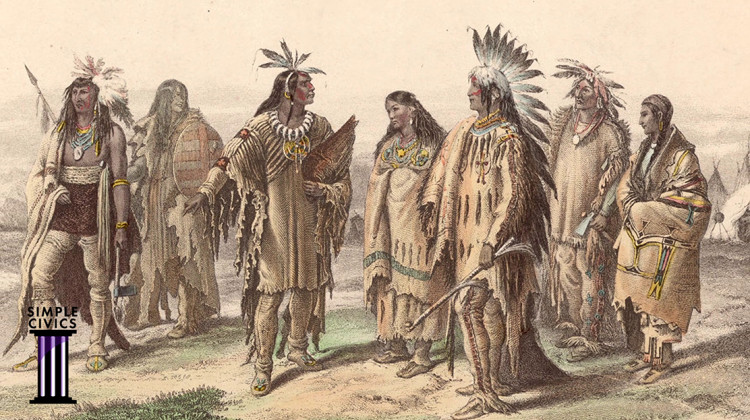
The Unseen Tapestry: Traditional Native American Forms of Government
For too long, the narrative of indigenous peoples in North America has been painted with broad, often inaccurate strokes. The image of the "noble savage" or the "primitive tribe" persists, obscuring the profound complexity, sophistication, and incredible diversity of their societies. Nowhere is this misunderstanding more apparent than in the perception of Traditional Native American forms of government. Far from being simplistic or chaotic, these systems were intricate tapestries woven from centuries of accumulated wisdom, deeply rooted in spirituality, kinship, and an intimate connection to the land. They offer invaluable lessons in consensus-building, ecological stewardship, and community well-being, challenging many assumptions of Western political thought.
The most critical truth to grasp is that there was no single "Native American government." Before European contact, North America was home to over 500 distinct Indigenous nations, each with its own language, culture, and, crucially, its own unique system of governance. These systems varied as widely as the landscapes they inhabited – from the vast, decentralized bands of the Great Basin to the complex, hereditary chiefdoms of the Pacific Northwest, and the highly structured confederacies of the Northeast. To speak of a monolithic "Native American government" is akin to speaking of a single "European government" encompassing everything from ancient Greek democracies to medieval monarchies.
Yet, despite this immense diversity, certain core principles often underpinned these disparate systems. A profound sense of interconnectedness – with the land, the spirit world, and all living beings – was paramount. Decision-making was frequently driven by the pursuit of consensus rather than simple majority rule, emphasizing the importance of every voice and the need to maintain social harmony. Leadership was often earned through merit, wisdom, and service to the community, rather than solely through hereditary right or coercive power.
One of the most celebrated and studied examples of Indigenous governance is the Haudenosaunee Confederacy, also known as the Iroquois Confederacy, comprising the Mohawk, Oneida, Onondaga, Cayuga, and Seneca nations (and later, the Tuscarora). For centuries before the arrival of Europeans, the Haudenosaunee operated under the Great Law of Peace (Kaianere’kó:wa), a sophisticated oral constitution that established a representative democracy with checks and balances, bicameral legislature, and a system for resolving disputes peacefully.
The Great Law, attributed to the peacemaker Deganawida and Hiawatha, brought together warring nations under a unified council. This council consisted of 50 sachems (chiefs), each representing a specific clan and nation, chosen by the Clan Mothers – the matriarchs who held significant power and authority within the matrilineal Haudenosaunee society. Clan Mothers had the power to nominate, guide, and even depose sachems if they failed to act in the best interest of the people. This emphasis on women’s political authority stands in stark contrast to the patriarchal systems prevalent in Europe at the time.

"The Clan Mothers are the ones who pick the chiefs," explained Mohawk scholar and elder Audrey Shenandoah. "They guide them, they advise them, and if a chief isn’t doing what he’s supposed to do, they can remove him." This reciprocal relationship ensured accountability and embedded leadership within the collective wisdom of the community. The Great Law also established a system of layered governance, from clan councils to village councils, national councils, and finally the Grand Council, ensuring that decisions were debated and refined at multiple levels before consensus was reached. It enshrined principles of justice, individual liberties, and peace among nations, and its influence on the framers of the U.S. Constitution, while debated by historians, is a compelling testament to its enduring legacy.
Beyond the Haudenosaunee, other nations developed equally intricate, though vastly different, governmental structures. In the Great Plains, tribes like the Lakota, Dakota, and Nakota (Sioux) often organized into bands with temporary leadership, particularly for hunting and warfare. The Oceti Sakowin (Seven Council Fires) was a confederacy that united these bands, especially during times of crisis or for large communal hunts. Leadership roles, such as war chiefs and peace chiefs, were distinct and often situational, with power flowing from demonstrated skill, generosity, and wisdom rather than inherited status. Decisions were made through extensive discussion and consensus within council circles, where every voice was heard, and elders were highly respected for their knowledge and experience.
In the Southwest Pueblo communities, such as the Hopi and Zuni, governance was deeply intertwined with spiritual and ceremonial life. Leaders were often religious figures, and the annual cycle of ceremonies played a crucial role in maintaining social order, allocating resources, and guiding community decisions. These were highly centralized, theocratic systems where the well-being of the community and harmony with the spiritual world were paramount. The Hopi, for example, maintained a complex system of clan leaders and religious societies, each responsible for specific aspects of community life and ceremony.
Further west, among the Nations of the Pacific Northwest Coast like the Haida, Tlingit, and Kwakwaka’wakw, societies were often highly stratified, featuring hereditary chiefs, nobles, commoners, and sometimes even slaves. Wealth, often displayed and redistributed through elaborate potlatch ceremonies, played a significant role in determining status and validating leadership. Governance was often tied to specific lineages and clans, with chiefs responsible for managing resources, presiding over ceremonies, and maintaining peace within their territories. While seemingly hierarchical, these systems also incorporated elements of collective responsibility and decision-making within the clan structures.
Regardless of the specific structure, several commonalities persisted. Kinship was almost universally the fundamental building block of society and governance. Clans, extended families, and kinship networks defined an individual’s rights, responsibilities, and place within the political structure. Land was not typically viewed as a commodity to be owned individually but as a sacred trust, held communally and managed for the benefit of all, including future generations. The concept of "seven generations" – that decisions should consider the impact on the next seven generations – was a guiding principle for many nations, fostering a long-term perspective rarely seen in modern governance.
Justice systems, too, differed significantly from Western models. Rather than focusing on punishment and retribution, many traditional Indigenous justice systems emphasized restorative justice. The goal was to repair harm, reintegrate offenders into the community, and restore balance. If a wrong was committed, the community would often come together to mediate, negotiate restitution, and facilitate reconciliation. Ostracization or banishment, rather than incarceration, were often the severest forms of punishment, underscoring the vital importance of community belonging.
The arrival of European powers profoundly disrupted and often dismantled these intricate systems. Europeans, accustomed to hierarchical monarchies and centralized authority, struggled to comprehend or acknowledge the validity of diverse Indigenous governance. They often sought to identify a single "chief" with whom to negotiate treaties, even in societies where leadership was distributed or situational. This imposition of foreign political structures, coupled with forced relocation, assimilation policies, and the outright suppression of Indigenous cultures, inflicted immense damage.
Yet, the spirit of traditional governance endured. Many contemporary Indigenous nations are engaged in revitalization efforts, drawing upon ancestral knowledge to inform modern tribal governments. The principles of consensus, ecological stewardship, restorative justice, and community-centered leadership continue to offer powerful alternatives and complements to mainstream political thought.
In understanding traditional Native American forms of government, we move beyond simplistic stereotypes and uncover a rich legacy of political innovation, ethical leadership, and sustainable living. These systems were not merely historical curiosities but vibrant, adaptable frameworks that allowed diverse nations to thrive for millennia. They stand as enduring testaments to human ingenuity and offer profound insights for navigating the complex challenges of our own time, reminding us that true governance is ultimately about fostering harmony, justice, and the well-being of all.


