Echoes of Ingenuity: The Enduring Legacy of Traditional Native American Technologies
For too long, the narrative surrounding Indigenous peoples of North America has been clouded by misconceptions, often portraying their societies as "primitive" or lacking in technological advancement. This perspective not only dismisses millennia of sophisticated innovation but also overlooks the profound wisdom embedded within their traditional practices. Far from simple, Native American technologies were intricate, diverse, and meticulously adapted to their specific environments, embodying principles of sustainability, ingenuity, and deep ecological understanding that hold invaluable lessons for the modern world.
From the arid deserts of the Southwest to the dense forests of the Northeast, and from the frozen expanses of the Arctic to the temperate rainforests of the Pacific Northwest, Indigenous communities developed a vast array of tools, structures, and systems that allowed them to thrive. These technologies were not merely about survival; they represented a holistic worldview, where every invention was interwoven with spiritual beliefs, social structures, and an unwavering respect for the natural world.
Masters of the Land: Agriculture and Food Production
Perhaps one of the most remarkable technological achievements of Native Americans lies in their agricultural innovations. Long before European contact, Indigenous farmers had domesticated a wide variety of plants, transforming wild species into staple crops that would eventually feed the world. Maize (corn), beans, and squash, famously known as the "Three Sisters," exemplify a sophisticated understanding of companion planting. Corn provides a stalk for beans to climb, beans fix nitrogen in the soil, and squash leaves shade the ground, retaining moisture and deterring weeds. This symbiotic relationship maximized yields and sustained soil fertility without the need for synthetic fertilizers, a testament to sustainable ecological engineering.
Beyond the "Three Sisters," Indigenous peoples cultivated potatoes, chili peppers, sunflowers, tobacco, and countless medicinal plants. In the arid Southwest, the Hohokam people of present-day Arizona developed extensive irrigation systems, constructing hundreds of miles of canals to divert water from rivers to their fields. These networks, some of which were 70 feet wide and 10 feet deep, represent an astounding feat of hydraulic engineering, demonstrating an advanced understanding of hydrology and resource management that sustained large populations for centuries. Similar ingenuity can be seen in the elaborate terraced farming systems used by communities in mountainous regions, preventing erosion and maximizing arable land.
Food preservation was equally advanced. Techniques like drying, smoking, and fermenting allowed communities to store surplus food for lean seasons. Pemmican, a mixture of dried meat, rendered fat, and berries, provided a highly nutritious, lightweight, and long-lasting food source crucial for hunters and travelers, particularly on the Plains.
Crafting Survival: Tools, Textiles, and Pottery
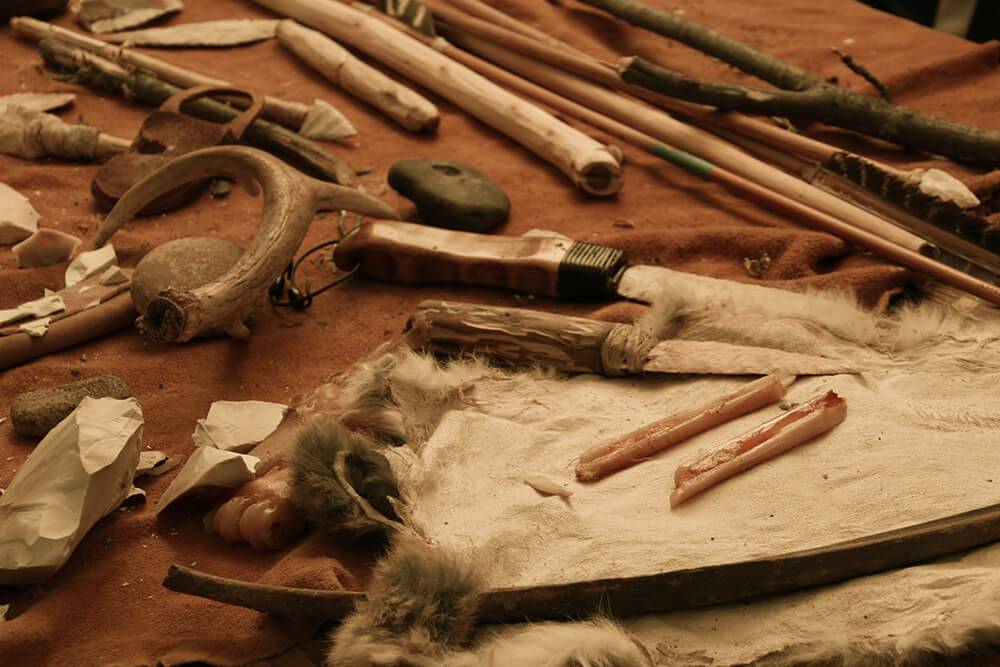
The sheer diversity and craftsmanship of Native American tools speak volumes about their technological prowess. Flintknapping, the art of shaping stone into tools, was a highly skilled craft. Obsidian, chert, and flint were meticulously flaked to create incredibly sharp projectile points, knives, scrapers, and drills. These tools were not just functional; their creation often involved precise knowledge of stone properties and considerable artistic skill, resulting in objects of remarkable beauty and efficacy.
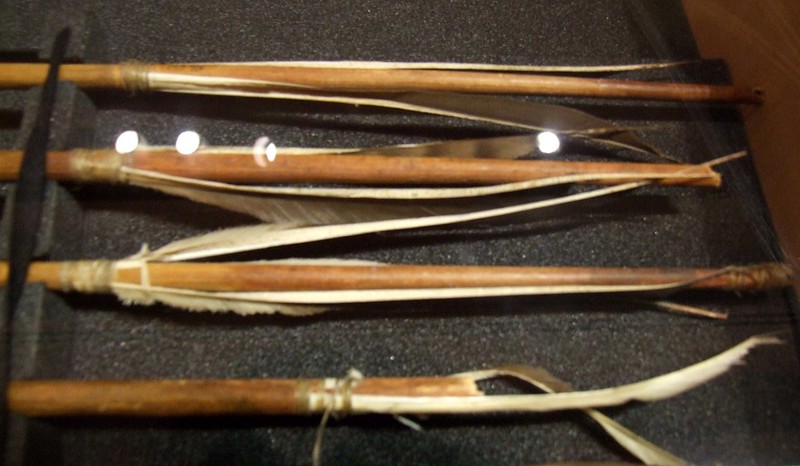
Bone and antler were also extensively used for tools, from needles and awls for sewing to harpoons and fishing hooks. Animal sinew provided strong thread, while plant fibers were woven into cordage, nets, and traps. The bow and arrow, a revolutionary hunting technology, allowed for greater range and accuracy, profoundly impacting hunting strategies across the continent. Atlatls, or spear-throwers, predated the bow and arrow in many regions, providing leverage to propel darts with incredible force and speed.
Basketry reached an unparalleled level of sophistication among many groups, particularly in California and the Great Basin. Using materials like willow, sumac, and sedge, weavers created baskets so tightly woven they could hold water, used for cooking (by dropping hot stones inside), storage, and carrying. The intricate patterns and precise construction of these baskets are a testament to generations of accumulated knowledge and artistic mastery.
Pottery, developed independently in many regions, allowed for efficient cooking and storage. Using local clays, potters created vessels of various shapes and sizes, often decorated with symbolic designs. The coil method, where clay ropes are built up layer by layer, allowed for the creation of durable and aesthetically pleasing forms, fired in open pits or rudimentary kilns.
Shelters of Ingenuity: Adapting to Every Environment
Native American architecture demonstrates an astonishing ability to adapt to diverse climates and available resources. Far from crude, these dwellings were sophisticated shelters designed for specific environmental challenges, offering comfort, durability, and often, portability.
The iconic teepee (or tipi) of the Plains tribes is a marvel of mobile architecture. Constructed from a conical framework of poles covered with buffalo hides, it was remarkably stable against strong winds, easy to erect and dismantle, and efficient to transport. Crucially, the adjustable smoke flaps at the top allowed for excellent ventilation and temperature control, making it comfortable in both summer heat and winter cold.
In the Northeast, the Iroquois built longhouses, massive communal dwellings that could stretch over 200 feet, housing multiple families. These structures, made from elm bark over a sturdy wooden frame, were insulated, durable, and facilitated a close-knit community life. Similarly, the wickiups and wigwams of various Eastern Woodland and Great Basin tribes were dome-shaped structures made from branches and bark or reeds, offering efficient shelter and often semi-portability.
Perhaps the most enduring architectural achievements are the Pueblo structures of the Southwest. Built from adobe (sun-dried clay bricks) and stone, these multi-story, multi-room complexes were often integrated into cliff faces or built into defensive positions. Their thick walls provided natural insulation, keeping interiors cool in scorching summers and warm in freezing winters. Designed with passive solar principles, these ancient apartment complexes represent a high level of civil engineering and urban planning.
Further north, the peoples of the Arctic developed the igloo, a temporary but incredibly effective shelter constructed from blocks of snow. Its domed shape is structurally strong, and the snow itself provides excellent insulation, making it a surprisingly warm refuge in extreme cold.
Navigating Worlds: Transportation and Navigation
Movement across vast landscapes and waterways necessitated equally ingenious transportation technologies. The canoe stands out as a prime example. From the lightweight, agile birchbark canoes of the Ojibwe and Algonquin, perfect for navigating lakes and rivers, to the massive dugout canoes of the Pacific Northwest, carved from single cedar trees and capable of carrying dozens of people and tons of cargo across open ocean, these vessels were engineering marvels. Their design reflected a deep understanding of hydrodynamics and material properties.
On land, snowshoes allowed travel over deep snow, essential for hunting and communication in winter. Their broad surface distributed weight, preventing sinking, and their design varied to suit different terrains and snow conditions. The travois, a frame made of two poles lashed to an animal (originally dogs, later horses) with a platform or netting for carrying loads, revolutionized land transportation for Plains tribes, allowing them to move their camps and possessions efficiently.
Navigation was not solely reliant on physical tools. Indigenous peoples possessed an extraordinary understanding of their environment, using celestial bodies, landforms, currents, and even subtle changes in vegetation and animal behavior to orient themselves. Astronomical knowledge was deeply integrated into their cultures, used for calendrical purposes, planting cycles, and spiritual ceremonies, demonstrating a profound scientific understanding of the cosmos.
The Science of Healing: Medicine and Wellness
Traditional Native American medicine was a sophisticated system, combining empirical knowledge of plants with a holistic approach to health that addressed the physical, mental, and spiritual well-being of an individual. Shamans and medicine people possessed extensive botanical knowledge, identifying thousands of plants for their medicinal properties.
For instance, the use of willow bark to alleviate pain and fever was a widespread practice, long before its active compound, salicylic acid, was isolated and synthesized into aspirin. Other plant-based remedies included Echinacea for infections, cascara sagrada as a laxative, and numerous poultices and infusions for various ailments. Beyond specific remedies, healing ceremonies, sweat lodges, and spiritual practices played crucial roles in restoring balance and promoting wellness, recognizing the interconnectedness of all aspects of life.
The Enduring Legacy of Sustainability and Ingenuity
What truly sets traditional Native American technologies apart is the philosophy that underpinned their development: sustainability. These innovations were not about conquering nature but about living in harmony with it. Resources were utilized respectfully, waste was minimized, and practices were designed to ensure the health of the land for future generations. This deep ecological ethic, born from centuries of observation and adaptation, is perhaps their most profound legacy.
As Oren Lyons, Faithkeeper of the Onondaga Nation, once stated, "We are living in a time when the world is calling for a new vision, a new way of thinking about how we live on this Earth. And that vision is not new to us. It is ancient." The "ancient" wisdom Lyons refers to is intrinsically linked to the technologies developed by his ancestors and countless other Indigenous peoples.
In an era grappling with climate change, resource depletion, and a disconnected relationship with the natural world, the study of traditional Native American technologies offers more than just historical insight. It provides a blueprint for resilience, innovation, and sustainable living. It challenges us to look beyond conventional notions of "progress" and to recognize the profound sophistication of societies that built their futures not on extraction, but on reciprocity and respect for the intricate web of life. Their echoes of ingenuity resonate not from a distant past, but as vital lessons for our collective future.


