
Echoes of the Wild Spirit: The Enduring Power of Native American Vision Quests
In the vast, untamed landscapes of North America, long before the arrival of European settlers, a profound spiritual tradition flourished among indigenous peoples: the Vision Quest. More than a mere ritual, it was, and for many still is, a transformative odyssey into the heart of the wilderness and the depths of the self, a sacred passage designed to connect an individual with the spirit world, discover their purpose, and gain guidance for their life’s journey. This ancient practice, known by various names across different tribes – perhaps most famously as Hanbleceya, or "crying for a vision," among the Lakota – stands as a testament to a worldview deeply rooted in nature, community, and the interconnectedness of all living things.
The Vision Quest is not a solitary adventure embarked upon lightly. It is a meticulously prepared, deeply reverent undertaking, often serving as a pivotal rite of passage from adolescence to adulthood, or as a crucial turning point for individuals seeking clarity, healing, or direction at any stage of life. Its roots plunge deep into the spiritual history of countless Native American nations, particularly those of the Plains, Great Lakes, and Pacific Northwest, where the rugged beauty of the land itself was considered a living temple, imbued with spiritual power.
The Call to the Wilderness: Preparation and Purification
The journey of a Vision Quest begins long before a single step is taken into the wilderness. It is initiated by a deep internal calling, a sense of incompleteness or a pressing need for guidance. Once this call is recognized, the seeker approaches an elder, a spiritual leader, or a medicine person, whose wisdom and experience are indispensable. This mentor guides the individual through an intensive period of preparation, emphasizing that the quest is not for personal gain but for the good of the community and the larger web of life.
This preparatory phase is rigorous and multifaceted. It typically involves extended periods of purification, often within a sweat lodge (Inipi ceremony among the Lakota). The sweat lodge, a dome-shaped structure covered with blankets or hides, becomes a sacred womb-like space, where heated stones are brought in, and water is poured over them, creating cleansing steam. Prayers, songs, and offerings are made, facilitating physical, mental, and spiritual purification. This process is designed to strip away the distractions and impurities of daily life, preparing the body and spirit to be receptive to the messages of the spirit world.

Fasting, often for several days, is another crucial element. Beyond its physical demands, fasting humbles the ego, sharpens the senses, and opens the individual to heightened states of awareness. It teaches discipline and demonstrates a willingness to sacrifice for spiritual growth. The elder also provides detailed instructions on the conduct of the quest, the specific prayers to be offered, the taboos to be observed, and the mindset required for such a profound endeavor. They remind the seeker that they are not alone, but supported by the prayers of their community and the spirits of their ancestors.
The Solitary Vigil: A Dialogue with the Unseen
With preparations complete, the seeker, often accompanied by their elder to a designated sacred site, is finally left alone. This site is usually remote, high on a mountain, deep in a forest, or beside a sacred body of water – a place chosen for its spiritual potency and isolation. Here, for a period typically ranging from one to four days and nights, the seeker undertakes their solitary vigil.
Stripped of all but the most basic necessities – a blanket, a small amount of water (or none), and perhaps some sacred tobacco for offerings – they face the elements, their fears, and their inner demons. The questor builds a small circle or square of stones, a personal sacred space within the vastness of nature, symbolizing their commitment and intention. Within this circle, they fast, pray, sing, and wait.
The experience is one of profound vulnerability. Exposed to the raw power of nature – the biting wind, the scorching sun, the chilling rain, the vast canopy of stars – the individual is forced to confront their physical limitations and psychological barriers. Hunger, thirst, and fear become constant companions, pushing the seeker to a state of profound humility and openness. "You go out there with nothing," as one elder might say, "and you learn that you are nothing. And from that nothingness, everything can be born."
It is in this state of heightened awareness, vulnerability, and spiritual intensity that visions are sought. A vision is not necessarily a vivid hallucination; it can manifest in myriad forms: a powerful dream, an encounter with an animal guide whose behavior holds symbolic meaning, a sudden flash of insight, a profound feeling of connection, a specific message heard in the wind, or the song of a bird. These experiences are believed to be direct communications from the Creator, from ancestral spirits, or from animal helpers, offering guidance, wisdom, and a sense of purpose. The seeker is expected to remain vigilant, observant, and receptive, recording any significant events or impressions, however subtle, in their memory.
The Return and Integration: Weaving the Vision into Life
Upon the designated completion of their time, the elder returns to collect the seeker. The first step upon returning is often a gentle reintroduction to food and water, followed by a crucial period of debriefing. The seeker recounts their experiences, their dreams, their animal encounters, and their feelings to the elder. This interpretation phase is vital, as the elder, drawing upon generations of traditional knowledge and spiritual understanding, helps the seeker decipher the meaning of their vision. Visions are often symbolic, and their true significance might not be immediately apparent to the questor.
The vision, once understood, is not something to be kept hidden or used for personal glory. It carries a profound responsibility. It might reveal a new name, a sacred song, a healing practice, a specific role within the community (such as a healer or a leader), or simply a deeper understanding of one’s inherent gifts and challenges. The vision becomes a compass for the individual’s life, guiding their decisions and actions. It is a lifelong commitment to walk in accordance with the insights received, integrating the wisdom into every aspect of their being.
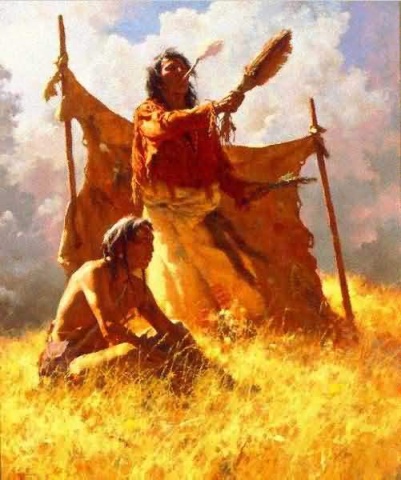
The return to the community is a celebration, but also a moment of quiet integration. The individual is transformed, often carrying a newfound sense of clarity, inner peace, and a deeper connection to the earth and the spirit world. They are now seen as a person who has faced the unknown and returned with a gift for their people, a piece of the sacred wisdom that strengthens the collective.
Enduring Legacy and Modern Challenges
The spiritual history of the Vision Quest is not confined to the past. Despite centuries of colonial suppression, forced assimilation, and the devastating loss of land and culture, many Native American communities have resiliently preserved and revitalized this sacred practice. The American Indian Movement (AIM) in the latter half of the 20th century played a significant role in rekindling interest and pride in traditional ceremonies, including the Vision Quest.
Today, many Native American elders continue to guide individuals on quests, ensuring the proper protocols and spiritual integrity are maintained. These contemporary quests serve similar purposes: to reconnect with ancestral ways, to heal historical trauma, to find personal direction in a complex modern world, and to reinforce cultural identity. "The land speaks to us," explains a contemporary Lakota elder, "if we only remember how to listen. The Vision Quest teaches us that listening."
However, the Vision Quest, like many other sacred Native American traditions, has faced challenges in the modern era, particularly cultural appropriation. The commercialization of "vision quest retreats" by non-Native individuals, often devoid of proper understanding, respect, or traditional lineage, is a source of deep concern and offense for many indigenous communities. These superficial adaptations strip the practice of its profound spiritual context and reduce it to a marketable experience, disrespecting generations of sacred knowledge and the suffering endured to preserve it. True Vision Quests are not tourist attractions or self-help workshops; they are solemn spiritual undertakings rooted in specific cultural frameworks and guided by legitimate spiritual authorities.
In an increasingly disconnected and material world, the Native American Vision Quest offers a timeless message: that profound wisdom and purpose can be found not in external pursuits, but in the quiet solitude of nature, in deep communion with the spirit world, and in humble dedication to the well-being of all. It reminds us that true strength lies in vulnerability, that clarity emerges from silence, and that the echoes of the wild spirit continue to call to those brave enough to listen. Its enduring power lies in its ability to transform individuals, to heal communities, and to keep alive a sacred bond with the earth and the unseen forces that shape our lives.


