
Beyond the Teepee: Unpacking the Architectural Brilliance of Native American Homes
When one conjures an image of Native American housing, the conical silhouette of the teepee often dominates the mind’s eye. While undeniably iconic and a testament to ingenious design, this singular image vastly underrepresents the breathtaking diversity, profound adaptability, and intricate architectural brilliance that characterized Indigenous dwellings across North America for millennia. Far from simple shelters, these homes were sophisticated expressions of cultural identity, deep ecological knowledge, and masterful engineering, each meticulously tailored to specific environments, available resources, and unique societal structures.
For thousands of years before European contact, Native American nations thrived across a continent of staggering ecological variety, from the frozen tundras of the Arctic to the sun-baked deserts of the Southwest, the dense forests of the Northeast, and the vast plains of the interior. Each landscape presented unique challenges and opportunities, and Indigenous builders responded with an astonishing array of solutions. Their architecture was not merely functional; it was imbued with spiritual significance, communal values, and a sustainable ethos that modern construction is only now beginning to rediscover.
A Tapestry Woven from Earth, Wood, and Hide: The Principle of Adaptation
The foundational principle guiding Native American housing design was an unparalleled responsiveness to the immediate environment. Unlike European settlers who often sought to impose their architectural styles on new lands, Indigenous peoples understood that the land itself provided the blueprint. Materials were sourced locally and sustainably, construction techniques were honed over generations, and the finished structures were designed to harmonize with, rather than conquer, nature.
"Native American architecture is a testament to sophisticated engineering and a deep understanding of natural principles," notes Dr. Sarah B. Williams, an anthropologist specializing in Indigenous cultures. "Their homes weren’t just buildings; they were living entities, constantly in dialogue with the sun, wind, and the very earth they sprang from." This intimate connection ensured resilience against harsh weather, efficient use of energy, and minimal environmental impact long before such concepts became buzzwords.
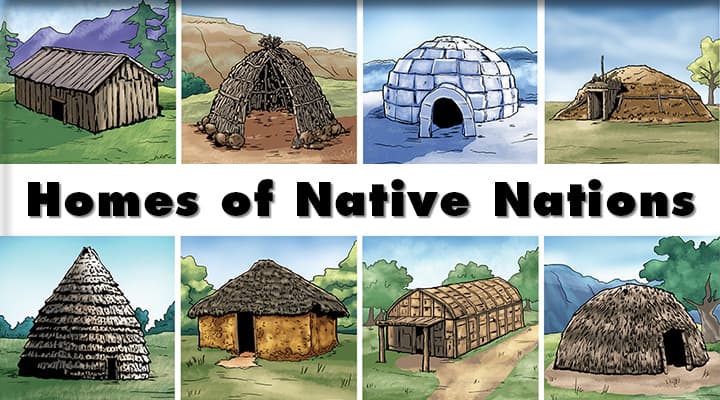
Nomadic Ingenuity: The Teepee and Its Kin
Perhaps the most famous example of adaptive design is the teepee (often spelled tipi), primarily associated with the nomadic and semi-nomadic nations of the Great Plains, such as the Lakota, Cheyenne, and Crow. Far from a primitive tent, the teepee was a marvel of portable architecture. Its conical shape was inherently stable against strong winds, and the carefully arranged poles provided a sturdy framework.
The exterior covering, traditionally made from tanned bison hides, offered excellent insulation against both bitter winter cold and scorching summer heat. A crucial innovation was the adjustable smoke flap at the apex, controlled by exterior poles, which allowed for efficient ventilation of an interior fire while keeping rain and snow out. The interior was often lined with an additional hide or fabric layer (the dew cloth or liner) that created an insulating air pocket and directed smoke upwards. Setting up or dismantling a teepee, which could house a family of 10-12, could be accomplished in under an hour, a vital necessity for groups following bison herds across vast distances. The teepee was not just a home; it was often viewed as a miniature universe, with the floor representing the earth and the poles reaching towards the sky.
Similar portable structures included the wigwam (or wetu), found among Algonquian-speaking peoples in the Northeast and Great Lakes regions. These dome-shaped homes, typically smaller than teepees, were constructed from bent saplings covered with bark, woven mats, or animal hides. While less mobile than the teepee, they could be dismantled and reassembled or left behind as temporary shelters, perfectly suiting the seasonal movements of hunting and gathering communities.
Sedentary Structures: Community, Permanence, and Grandeur
In regions where resources were more stable, Native American architecture evolved into more permanent and often grander forms, reflecting sedentary lifestyles and complex social structures.
The Longhouse of the Iroquois Confederacy (Haudenosaunee) in the Northeast is a prime example. These massive, rectangular structures, built from sturdy timber frames covered with elm bark, could stretch over 200 feet, housing multiple related families (up to 60 or more people) connected by a matriarchal lineage. A central corridor featured a series of hearths, with smoke holes above. The Longhouse was not just a dwelling; it was the focal point of social, political, and spiritual life, embodying the communal values and the enduring strength of the confederacy. "The Longhouse was truly a testament to collective identity and shared governance," explains an exhibit at the Seneca Art & Culture Center. "It was where decisions were made, stories were told, and the very fabric of our society was woven."
In the Pacific Northwest, the abundant cedar forests allowed nations like the Haida, Kwakwaka’wakw, and Tlingit to construct awe-inspiring Plank Houses. These monumental dwellings, often 40-60 feet wide and hundreds of feet long, were built from massive, hand-hewn cedar planks. The sophisticated joinery and intricate carving on house fronts, interior posts, and totem poles reflected the wealth, status, and spiritual beliefs of the families within. These permanent structures were ideal for the region’s rich marine resources, supporting large, settled communities with elaborate social hierarchies and artistic traditions. The sheer scale of these structures, often housing multiple families, speaks to the communal labor and advanced woodworking techniques employed.
Masters of Earth and Stone: The Southwest Pueblos and Hogans

The arid landscapes of the American Southwest spurred unique architectural innovations focused on climate control and resource conservation. The Pueblos, multi-story, apartment-like complexes built by the Ancestral Puebloans (and later by modern Pueblo peoples like the Hopi, Zuni, and Taos), are among the most remarkable examples of pre-Columbian architecture. Constructed from stone and adobe (sun-dried clay bricks), these structures were often built into cliffsides or on mesa tops, offering both defense and passive solar heating/cooling.
Thick adobe walls provided excellent thermal mass, keeping interiors cool during scorching days and warm during freezing nights. Small windows minimized heat gain, and staggered setbacks created natural shade. Access was often via ladders to upper levels, providing security. Sites like Mesa Verde, Chaco Canyon, and Taos Pueblo showcase a masterful understanding of urban planning and sustainable living, demonstrating complex societies living in harmony with a challenging environment. Chaco Canyon’s Pueblo Bonito, for instance, a D-shaped complex with hundreds of rooms, was oriented to capture solar energy, reflecting a profound astronomical and engineering knowledge.
In stark contrast, yet equally brilliant, is the Hogan of the Navajo (Diné) people. Traditionally a circular or polygonal (often octagonal) structure, the Hogan is built from logs and earth, with the door always facing east to welcome the rising sun and good fortune. The earth-covered walls and roof provide exceptional insulation, making the Hogan a comfortable dwelling year-round. More than a physical shelter, the Hogan is a deeply sacred space, representing the universe and a spiritual connection to the land. Its construction is often accompanied by ceremonies, reflecting the belief that the home is a living entity integral to the family’s spiritual well-being.
Wetlands and Earthworks: Other Notable Designs
In the Southeastern United States, nations like the Seminole and Miccosukee adapted to the hot, humid, and often flood-prone Everglades with the Chickee. These elevated, open-sided platforms with thatched roofs provided shelter from rain and sun while allowing cooling breezes to pass through, keeping residents above the swampy ground and away from insects.
Further north, in regions like the Great Plains and Missouri River Valley, nations such as the Mandan, Hidatsa, and Pawnee constructed sophisticated Earth Lodges. These large, circular, semi-subterranean homes featured robust timber frames covered with layers of willow branches, grass, and thick earth, creating incredibly insulated and sturdy dwellings that could withstand harsh winters and hot summers. These lodges were often clustered in large, fortified villages, reflecting settled agricultural lifestyles.
The Enduring Legacy and the Impact of Colonization
The arrival of European colonists brought not only disease and conflict but also a devastating disruption to these rich architectural traditions. Forced relocation, the loss of traditional lands and access to native building materials, and the imposition of Western architectural norms gradually eroded centuries of accumulated knowledge and practice. Many Indigenous communities were compelled to abandon their ingenious designs for log cabins, frame houses, or government-issued housing that often proved ill-suited to their environments and cultural needs.
Despite this historical trauma, the spirit of Native American architectural ingenuity endures. Today, there’s a powerful movement towards cultural revitalization, with communities relearning and rebuilding traditional structures. These efforts are not just about preserving history; they are about reclaiming identity, fostering community, and demonstrating the profound wisdom embedded in Indigenous ways of living.
The historical Native American housing styles offer invaluable lessons for contemporary challenges, particularly in sustainable architecture and resilient design. Their principles of local sourcing, energy efficiency, climate adaptation, and spiritual connection to the land are more relevant than ever. Beyond the singular image of the teepee, lies a vast and varied architectural landscape—a testament to human ingenuity, cultural depth, and an enduring bond with the natural world that continues to inspire. These homes whisper stories of adaptation, community, and a profound respect for the earth, urging us to listen and learn.


