Echoes in Clay, Canvas, and Code: The Enduring Legacy and Evolution of Native American Art
From the ancient petroglyphs etched into sun-baked rock faces to the vibrant digital installations of contemporary artists, Native American art forms represent a continuous, dynamic tapestry woven through millennia. Far from static relics of the past, these artistic expressions have historically served as profound repositories of spiritual belief, social structure, historical narrative, and individual identity, evolving dramatically in response to environmental shifts, cultural exchange, and seismic historical events. To trace the development of Native American art is to embark on a journey through the very soul of the continent, witnessing an unparalleled resilience and creative ingenuity.
The roots of Native American art plunge deep into prehistory, long before the arrival of European explorers. The earliest known artistic expressions date back thousands of years, manifesting as rock art (pictographs and petroglyphs) found across the continent. These enigmatic images – depicting animals, human-like figures, geometric patterns, and celestial bodies – were not merely decorative but functioned as crucial communicative tools, recording spiritual visions, hunting routes, astronomical observations, and tribal histories. Sites like Utah’s Great Gallery in Canyonlands National Park or California’s Chumash Painted Cave State Historic Park offer breathtaking windows into these ancient worlds, revealing a sophisticated understanding of form and symbolism.
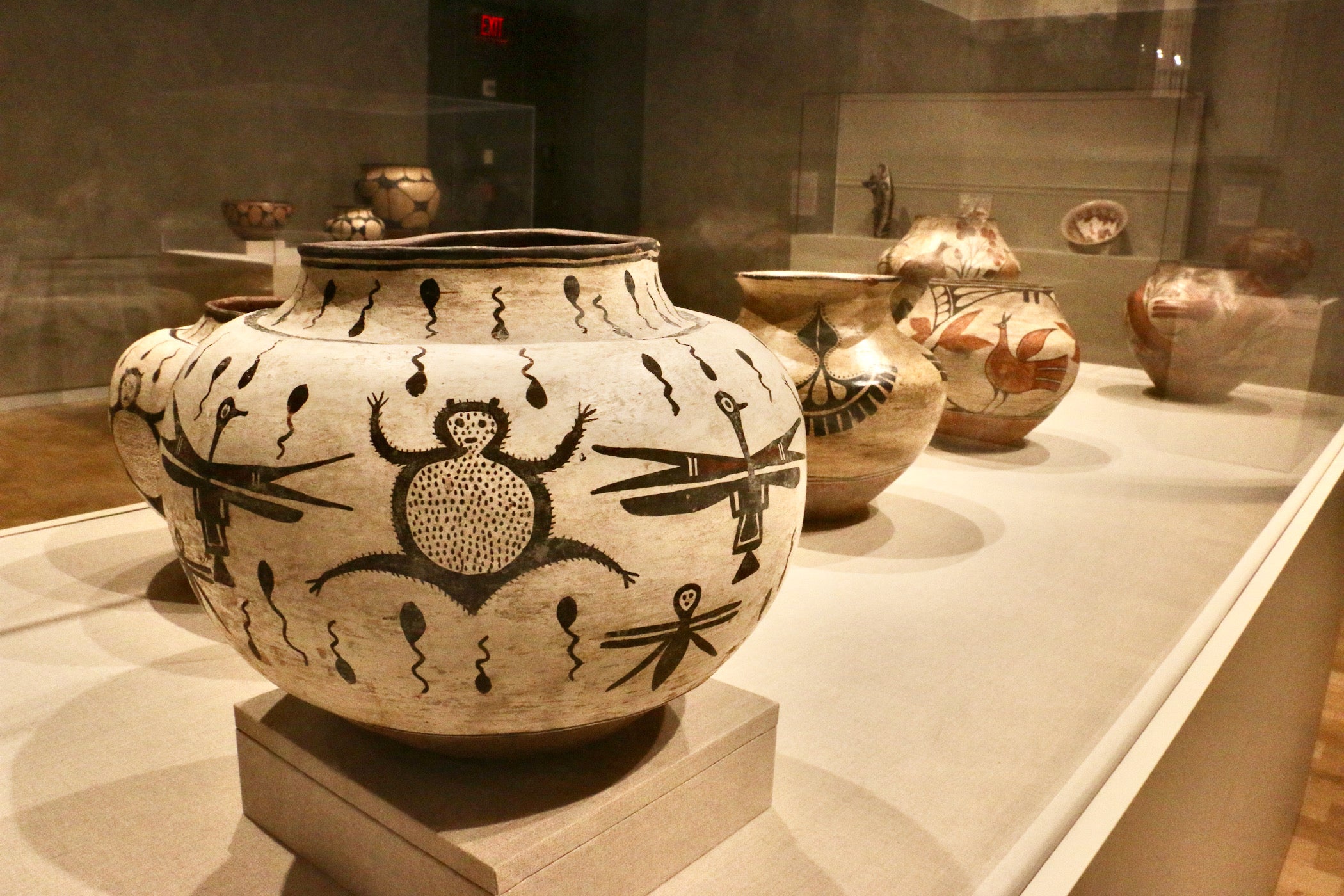
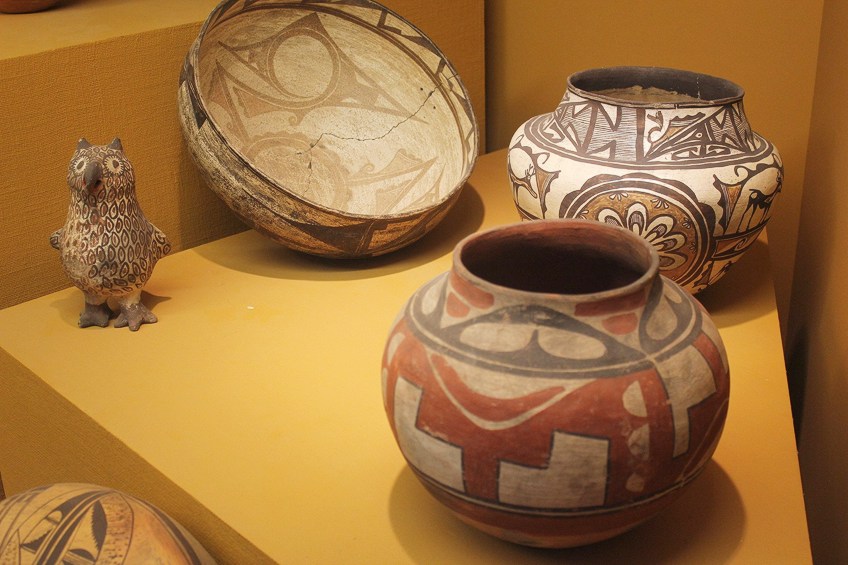
Beyond rock art, early art forms were deeply integrated into daily life and spiritual practice. Pottery, particularly prominent in the American Southwest among ancestors of the Pueblo people, emerged around 2000 BCE. Early forms were utilitarian, designed for cooking and storage, but quickly evolved into exquisite expressions of cultural identity. The intricate black-on-white designs of Mimbres pottery (1000-1130 CE) are renowned for their zoomorphic and anthropomorphic figures, often depicting daily life or mythological scenes, frequently "killed" with a small hole in the center before burial to release the spirit. Further north, the Woodland and Mississippian cultures (c. 1000 BCE – 1500 CE) produced elaborate effigy mounds and carved stone pipes, often in the shape of animals or human figures, reflecting complex ceremonial practices and cosmological beliefs. The Great Serpent Mound in Ohio, for instance, remains a monumental testament to their astronomical knowledge and spiritual reverence for the land.
The period of European contact in the 16th century marked a profound pivot point for Native American art. While often devastating to communities, contact also introduced new materials and artistic concepts, leading to both adaptation and innovation. Glass beads, introduced through trade, quickly replaced traditional porcupine quills in intricate beadwork, transforming clothing, bags, and ceremonial items into dazzling canvases of color and pattern. Similarly, European metalsmithing techniques, particularly silverwork, were adopted and transformed by Southwestern artists, notably the Navajo, who learned the craft from Mexican silversmiths in the mid-19th century. They developed a distinctive style, incorporating turquoise and creating iconic pieces like squash blossom necklaces and concho belts, which became powerful symbols of identity and status.
Textiles, especially weaving, saw significant development and adaptation. The Navajo, already skilled weavers of churro wool into blankets and garments, capitalized on the demand for durable and beautiful textiles. As the reservation era took hold in the late 19th century, and traditional lifeways were disrupted, weaving transitioned from primarily utilitarian items to highly sought-after commercial rugs. This shift led to an explosion of design innovation, with weavers experimenting with bolder geometric patterns, vegetal dyes, and larger formats to appeal to Anglo markets, while still retaining deep cultural meaning. The story of Navajo weaving exemplifies the resilience of Native American art as a means of economic survival and cultural preservation amidst immense pressure.
The late 19th and early 20th centuries, often termed the Reservation Era, brought unprecedented challenges. Traditional art forms were suppressed, and many ceremonies were outlawed. Yet, even in confinement, creativity found new outlets. Ledger Art emerged among Plains tribes, where warriors, deprived of buffalo hides, repurposed discarded ledger books from military forts and trading posts. Using pencils, crayons, and watercolors, they depicted scenes of daily life, battles, ceremonies, and visions, creating a poignant, often subversive, visual diary of a disappearing world. These works are invaluable historical documents and powerful artistic statements, reflecting a refusal to let their stories be silenced.
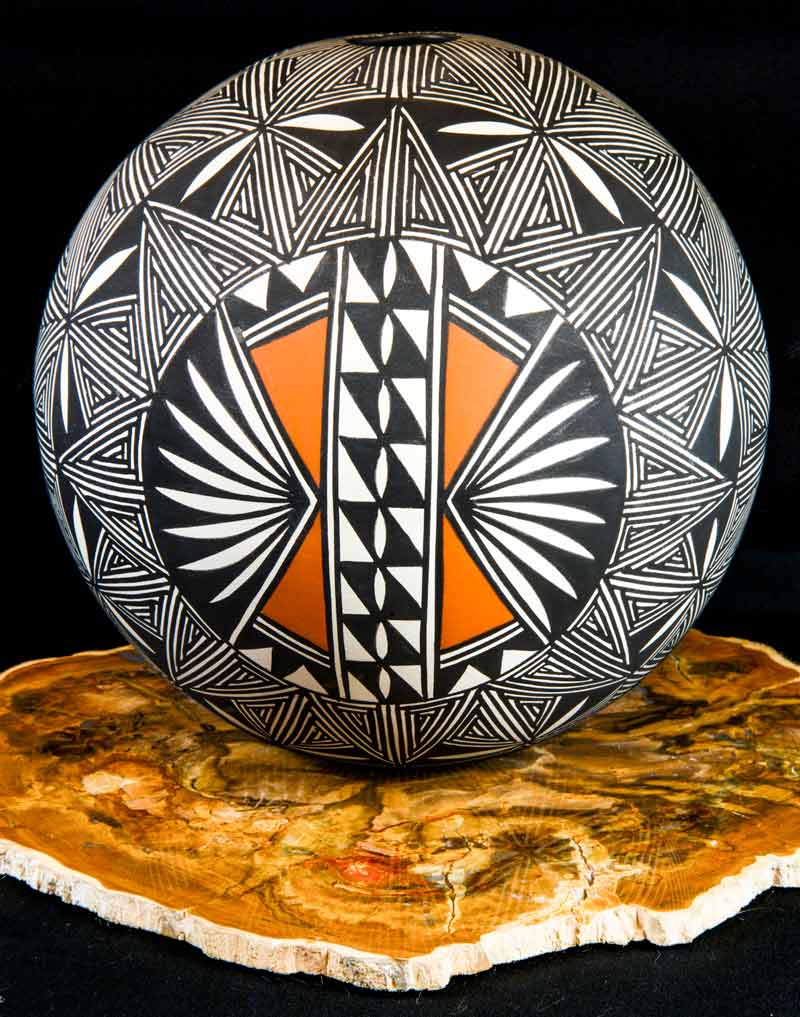
The early 20th century also saw the beginnings of a conscious effort to revive and institutionalize Native American art. Institutions like the Santa Fe Indian School, particularly under the influence of art instructor Dorothy Dunn in the 1930s, encouraged students to paint in a "traditional" flat style, often depicting ceremonial dances and daily life. While criticized by some for being somewhat restrictive, this movement played a crucial role in establishing Native American painting as a recognized art form within the broader American art world. Artists like Maria Martinez of San Ildefonso Pueblo, who, with her husband Julian, perfected the technique of black-on-black pottery in the early 1900s, elevated utilitarian pottery to the realm of fine art, bringing international acclaim to Pueblo ceramic traditions. Her innovative firing methods created shimmering, matte designs that captivated collectors and secured a legacy for generations of potters.
The mid-20th century witnessed a growing number of Native American artists entering mainstream art schools and galleries, beginning to challenge and redefine what "Native American art" could be. This era saw the rise of artists who consciously bridged traditional forms with contemporary artistic movements. Fritz Scholder (Luiseño), a pivotal figure, burst onto the scene in the 1960s and 70s with his groundbreaking, often unsettling, paintings that depicted Native Americans in a raw, expressionistic style, consciously subverting romanticized stereotypes and challenging the dominant narratives of American history. His work paved the way for a generation of artists to explore identity, politics, and social commentary through a distinctly Indigenous lens.
In the late 20th and early 21st centuries, Native American art has exploded into a diverse, global phenomenon. Contemporary Indigenous artists are working in virtually every medium imaginable – painting, sculpture, photography, film, digital art, installation art, and performance art – often drawing upon ancestral knowledge and iconography while engaging with global artistic trends and pressing contemporary issues. Artists like Jaune Quick-to-See Smith (Salish/Kootenai) use mixed media and collage to offer incisive social and political commentary on colonialism, environmental degradation, and Indigenous rights. Preston Singletary (Tlingit) fuses traditional Tlingit forms and mythological narratives with Venetian glassblowing techniques, creating stunning, luminous sculptures that honor his heritage while pushing the boundaries of material. Jeffrey Gibson (Choctaw/Cherokee) creates vibrant, multi-disciplinary works that blend traditional craft forms like beadwork and quilting with contemporary aesthetics, exploring themes of queer identity, consumer culture, and Indigenous futurism.
This latest chapter in Native American art is characterized by a powerful reclaiming of narrative and agency. Artists are not just preserving traditions but actively reinterpreting them, using them as a foundation for innovative expressions that speak to both Indigenous and global audiences. They challenge stereotypes, assert sovereignty, celebrate cultural diversity, and advocate for environmental justice. As art historian Janet Berlo aptly notes, "Native American art is not a static category; it is constantly being made and remade, reinterpreted and reimagined by Indigenous people themselves."
From the spiritual resonance of ancient rock art to the digital canvases reflecting contemporary Indigenous experiences, Native American art forms represent a testament to enduring creativity and resilience. They are living traditions, evolving with each generation, offering profound insights into human experience, connecting past, present, and future in a vibrant, unbroken thread. The journey of Native American art is a powerful reminder that culture is not a relic to be preserved in a museum, but a dynamic, breathing force that continually shapes and reshapes the world around us.